
Learning how to cash out Bitcoin usually means learning two separate moves: first you sell BTC for a fiat balance, then you withdraw that fiat balance to a bank account or supported payment method. The mistake beginners make is treating those moves as one button.
It feels like one button because the goal is simple: "I want my money out."
The machinery is less simple.
This guide explains how to convert Bitcoin to cash in a beginner-safe way, what to check before you sell bitcoin, why withdrawals can take time, and why taxes and scams need to be part of the conversation before anything is clicked.

Cashing out is usually a path: BTC, sell step, fiat balance, withdrawal, records.
Cash out vs sell vs withdraw
Cash out, sell, and withdraw are related, but they are not the same thing.
Selling Bitcoin means exchanging BTC for another balance on a platform. That balance might be USD, EUR, GBP, a stablecoin, or another supported asset. If your goal is money in a bank account, selling is usually only the first part.
Withdrawing fiat means moving a cash or fiat balance from a platform to a bank account, debit card, payment app, or another supported payout method.
Cashing out Bitcoin usually means doing both: sell BTC, then withdraw the fiat money.
That two-step model matters because many beginner problems happen in the gap between step one and step two. A person may sell BTC successfully, then discover that the fiat withdrawal method is unavailable, delayed, limited, under review, or not supported in their region.
Here is the basic route:
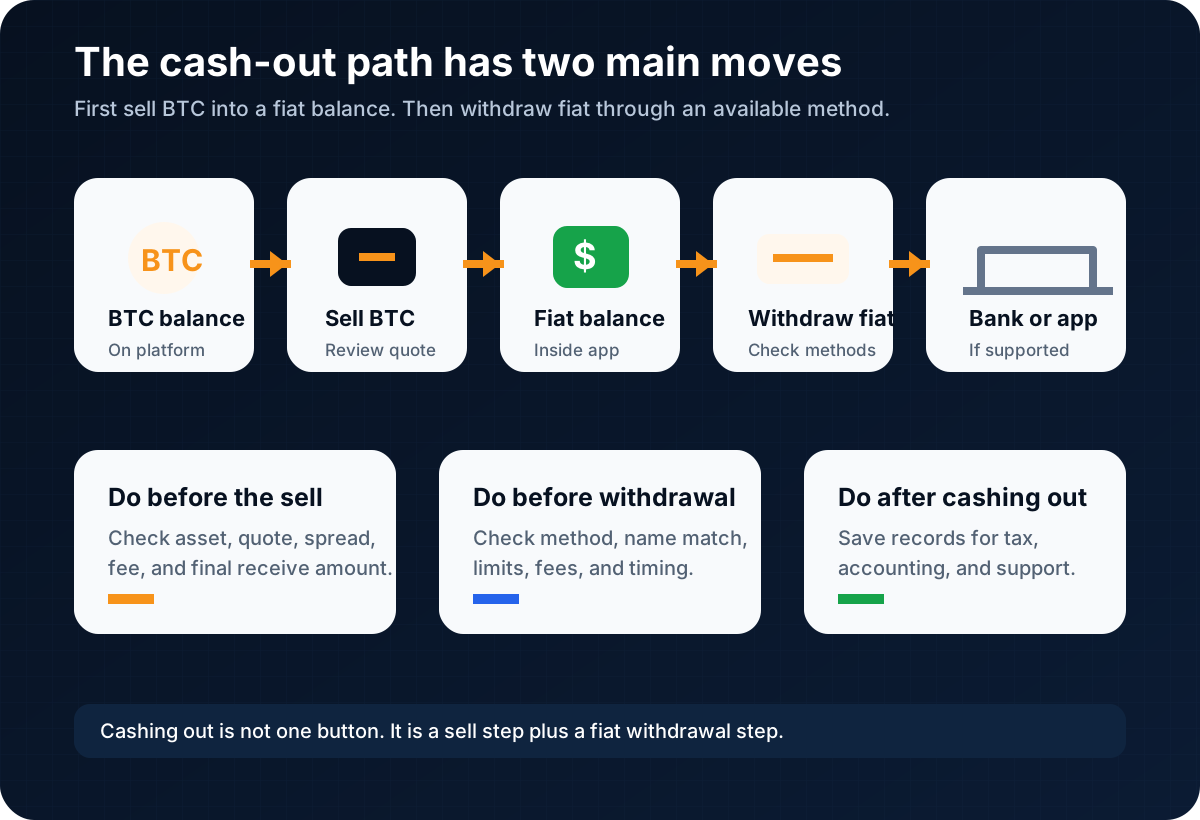
Cashing out Bitcoin is not one action; it is usually a sell step plus a fiat withdrawal step.
The short version:
If you still hold BTC, you have not cashed out yet.
If you sold BTC but the money is still inside the platform, you may have a fiat balance, not money in your bank.
If the fiat withdrawal is completed through a supported method, you are closer to the cash-out result most beginners mean.
The boring distinction is the useful distinction.
Common cash-out routes
There are several ways people try to cash out Bitcoin. The right route depends on where you live, what platform you use, what payment methods are supported, what amount is involved, and whether your account is fully verified.
For beginners, the usual routes are:
Crypto exchange to bank account: sell BTC on an exchange, then withdraw fiat to a linked bank account or supported payment method.
Payment app balance: sell BTC inside a payment app, then use or withdraw the app balance according to that app's rules.
Brokerage or investing app: sell BTC or a crypto-related product where supported, then withdraw settled cash according to the platform's policy.
Bitcoin ATM or physical cash route: use a cash-out service where legal and available, with fees, identity checks, limits, and safety concerns.
Peer-to-peer sale: sell to another person through a platform that supports P2P trading, if available in your region.
The last two routes are where beginners need extra caution. High fees, fake buyers, chargeback tricks, counterfeit cash, pressure tactics, and identity or safety issues can turn a "simple cash-out" into a very bad afternoon.
Do not use cash-out methods to avoid identity checks, taxes, sanctions, platform rules, bank rules, or local law. That is not a clever shortcut. It is usually a way to create account restrictions, failed withdrawals, frozen funds, legal problems, or tax problems.
How beginners should understand how to convert Bitcoin to cash
Think of conversion as a small pipeline:
BTC balance -> sell quote -> fiat balance -> withdrawal method -> bank or payment balance.
Each part of the pipeline can have its own rule.
The sell quote can change. The platform fee can change. The withdrawal method can have limits. The bank can review the transfer. The tax record can matter months later, when the emotional drama of the cash-out is long gone and only the numbers remain.
So the beginner question is not only "Can I cash out?"
The better question is:
Can I complete every step of the route before I start?
Step-by-step exchange cash-out flow
A typical exchange cash-out flow looks like this:
Confirm you are using the official platform website or app.
Make sure your account is secured and verified where required.
Check whether fiat withdrawals are supported in your region and account type.
Check whether your bank account or payment method can receive the withdrawal.
Select Bitcoin / BTC as the asset to sell.
Enter the amount you want to sell.
Review the quote, spread, fees, and fiat amount you may receive.
Confirm the sale only if you understand the transaction and personally decide to proceed.
Check the fiat balance after the sale.
Choose the fiat withdrawal method.
Review withdrawal limits, fees, estimated timing, bank details, and final confirmation screens.
Save trade and withdrawal records for your own accounting and tax review.
The sequence sounds slow because it is supposed to be slow.
The expensive mistakes are fast.
Binance example: sell BTC into a fiat balance
The Binance screenshot below is a real interface example captured after login. This account defaulted to USDT because of account and region context, so use it as a form example, not as a statement that your Binance screen will show the same asset, currency, fee, method, or button labels. If you are cashing out Bitcoin, select BTC where the platform allows it and check the current official screen before acting.

Example only: the sell form is where you review the asset, quote, receive currency, and confirmation boundary.
Before confirming a sale, check:
Is the asset really Bitcoin / BTC?
Is the amount correct?
What currency or balance will you receive?
Is there a fee, spread, or quoted price difference?
Is the quote live, and can it expire?
Will the money become withdrawable fiat, or only an internal balance?
Will selling create a record you may need for taxes?
Do not sell because a website, video, or stranger says the price is "about right." Use the platform's current preview screen and your own decision.
Binance example: withdraw fiat after selling
After selling, the second move is usually fiat withdrawal. The Binance example below shows a fiat withdrawal screen. It does not show a completed withdrawal. Available currencies, methods, limits, timing, fees, and bank requirements depend on region, verification status, account status, payment rails, and platform rules.

Cash out usually finishes through a fiat withdrawal method, if one is available for your account.
Before starting a fiat withdrawal, check:
Whether the withdrawal method is supported in your country or state.
Whether the bank account or payment method is in your own name.
Whether your account has any withdrawal holds or pending reviews.
The current minimum and maximum withdrawal amount.
The displayed fee and any possible bank-side fee.
The estimated processing time and whether weekends or bank holidays matter.
Whether extra security checks or verification steps may appear.
Do not use another person's bank account, edited documents, false identity information, or location tricks to get around platform rules. If a platform says a method is unavailable, the safer next step is to check official support, not to invent a workaround.
Fees, limits, and timing
No guide can promise the exact cash amount, fee, or arrival time for a Bitcoin cash-out. These numbers depend on the platform, asset, quote, payment method, region, verification level, bank, network conditions, and current policy.
Still, beginners can know what categories to look for.
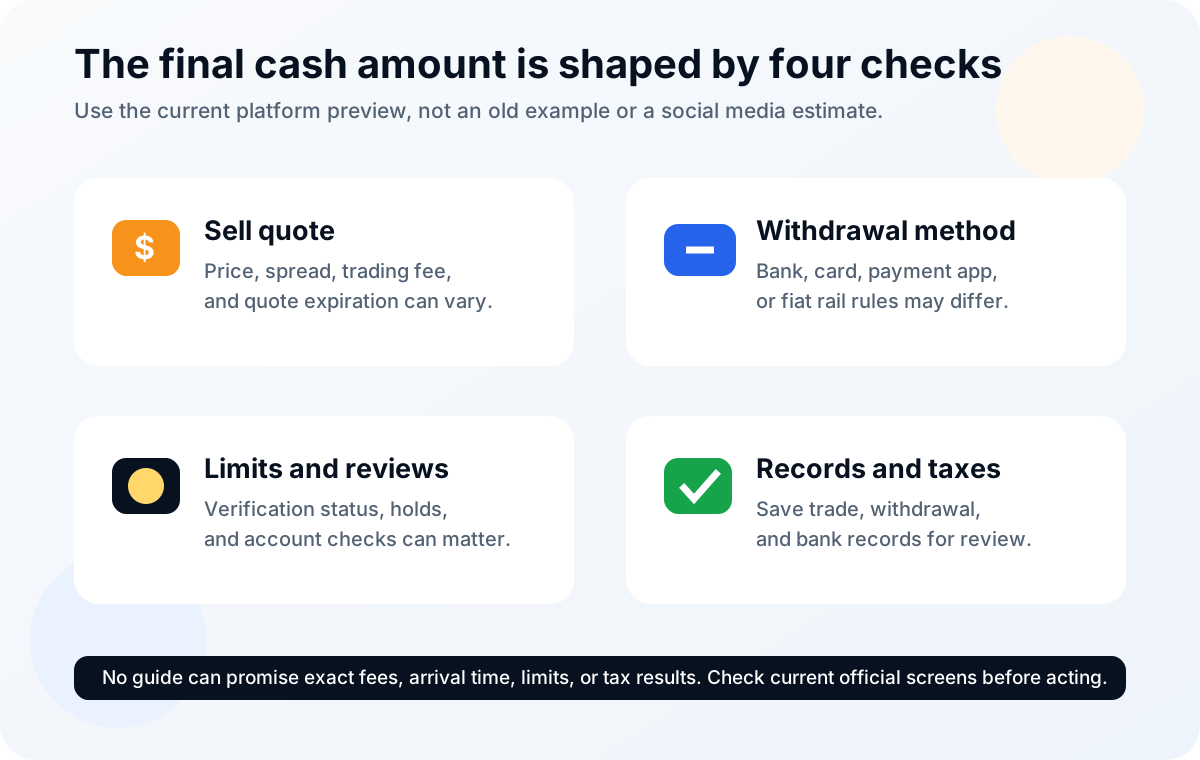
The final cash amount depends on quote, method, limits, review steps, and records.
The common cost and timing categories are:
Sell fee or trading fee: the platform may charge for selling BTC.
Spread: the quoted sell price may be lower than a market reference price.
Conversion fee: some apps charge for instant conversion.
Fiat withdrawal fee: a bank, card, wire, or payment method may have its own fee.
Bank-side fee: the receiving bank may charge or review the transfer.
Minimum and maximum limits: the platform may limit the cash-out amount.
Withdrawal hold: recent deposits, account changes, new devices, or security reviews may delay withdrawals.
Bank processing time: fiat transfers may depend on business days, payment rails, and bank reviews.
When a platform says an option is "instant," "fast," or "available," read the details. Instant for a quote is not the same as instant arrival in a bank account. A completed sale is not the same as a completed withdrawal.
This is the three-clock problem:
The sell clock: quote preview, confirmation, and fiat balance update.
The platform clock: withdrawal review, limits, holds, and security checks.
The bank clock: fiat rail processing, bank review, weekends, holidays, and posting.
If a withdrawal is delayed, do not start clicking random alternatives. Check the official status, transaction or withdrawal record, email notices from the platform, and official support channel first.
Tax and recordkeeping reminders
Cashing out Bitcoin may involve taxes. In the United States, the IRS treats digital assets as property for federal tax purposes and says taxpayers may have to report digital asset transactions. Selling or otherwise disposing of digital assets can be a reportable event.
This article is not tax advice.
The practical beginner habit is simple: keep records before you need them.
Save:
The date and time you bought or received the BTC.
The date and time you sold BTC.
The amount of BTC sold.
The fiat value at the time of sale.
Fees or spread information shown by the platform.
The withdrawal method and amount.
Bank or payment records showing the fiat deposit.
Any tax forms, statements, or transaction reports provided by the platform.
If your numbers are large, old, mixed across platforms, inherited, gifted, mined, paid as income, or transferred many times, get qualified tax help. A beginner guide can explain the shape of the issue. It cannot calculate your tax result.
Scam and support impersonation risks
Cash-out searches attract scammers because the user is already anxious. The scammer does not need to convince you Bitcoin exists. They only need to convince you that your money is stuck and they are the person who can unstick it.
That is the trap.

Real support will not need your seed phrase, private key, password, or login code.
Watch for these warning signs:
Someone says you must send more crypto to unlock a withdrawal.
A fake support agent asks for your password, seed phrase, private key, or two-factor code.
A stranger offers to "verify" your wallet, exchange account, or bank account.
A buyer wants to move the conversation off the platform.
A payment looks pending, reversible, or overpaid.
Someone says taxes or platform reviews can be skipped if you follow their steps.
A website copies a real exchange brand but uses a slightly different domain.
A screen-sharing request appears before you understand what is happening.
Do not send BTC to receive cash from a stranger. Do not pay a "release fee" in crypto to get your own money back. Do not install remote-control software for a support agent who contacted you first.
If you need help, use the official support channel inside the platform or from the official website you typed yourself.
Risks, limits, and common misconceptions
The first misconception is that selling Bitcoin and cashing out are the same thing. Selling can leave you with fiat inside a platform. Cashing out usually means withdrawing that fiat outside the platform.
The second misconception is that a wallet can always cash out directly. A self-custody Bitcoin wallet can send BTC, receive BTC, and help you control keys, but it usually cannot turn BTC into a bank deposit by itself. You may need a regulated exchange, payment app, broker, or other supported service.
The third misconception is that high fees mean a scam and low fees mean a good route. Fees matter, but the full route matters more: official platform, region support, identity requirements, bank compatibility, withdrawal limits, timing, records, and support quality.
The fourth misconception is that cashing out a large amount is just a bigger version of cashing out a small amount. Larger amounts can trigger more platform review, bank attention, tax complexity, and personal security concerns.
The fifth misconception is that tax only matters if money reaches your bank. Depending on your country, the taxable event may happen when you sell or dispose of BTC, not only when fiat arrives in the bank.
The sixth misconception is that a stranger on social media knows a special no-friction path. Most real financial systems have friction on purpose: identity checks, bank rules, platform reviews, and tax records. Friction is annoying. It is also where many fraud losses are stopped.
What to check before taking the next step
Before you cash out Bitcoin, run this checklist:
I know whether I am selling BTC, withdrawing fiat, sending BTC, or doing more than one action.
I am using the official website or app.
I know whether the platform supports fiat withdrawal in my region.
My identity verification and account security are complete where required.
My bank or payment method is eligible and in my name.
I reviewed the current quote, fee, spread, receive amount, and withdrawal method.
I understand that timing is not something any guide can promise.
I saved the records I may need later.
I am not using false information, another person's account, or a workaround.
No one is asking me for a seed phrase, private key, password, two-factor code, or "release fee."
If any line is unclear, pause. The cash-out screen will still be there after you understand it.
FAQ
Can I convert Bitcoin to cash instantly?
Sometimes a platform may show an instant sell quote or a fast balance update, but no guide should promise instant cash-out to a bank account. Selling BTC, withdrawal review, payment method processing, bank posting, account holds, and regional rules can all affect timing. Check the platform's current policy before acting.
Do I need a bank account to cash out?
Not always, but many common cash-out routes use a bank account, card, payment app, or other supported payout method. Availability depends on the platform and your region. If a route does not use a bank account, check fees, limits, identity requirements, safety risks, and local rules carefully.
Is cashing out Bitcoin taxable?
It can be. In the United States, selling or otherwise disposing of digital assets can create reporting obligations and possible gain or loss calculations. This article is not tax advice. Keep records and check IRS or local tax guidance for your situation.
How do I turn my Bitcoin into cash?
A common path is to sell BTC on a platform that supports fiat balances, then withdraw the fiat money through a supported bank or payment method. Before selling, check the official platform rules, current quote, fees, limits, withdrawal availability, and tax records.
How can I convert Bitcoin to real money?
Bitcoin can be converted to fiat currency through supported exchanges, payment apps, brokerages, or cash-out services. The route must be legal and available where you live, and it may require identity verification, fees, limits, and waiting time. Avoid anyone offering a private shortcut that asks for your login details or more crypto.
How much is $100 Bitcoin worth right now in USD?
$100 of Bitcoin is worth $100 in USD at the moment you measure it, before fees and spread, but the amount of BTC represented by $100 changes with the live BTC price. A platform's final quote can differ from a simple market-price estimate because of fees, spread, and timing.
How much is $1 Bitcoin in US dollars today?
If you mean 1 BTC, its USD value changes constantly with the market price. If you mean $1 worth of Bitcoin, the amount of BTC you get or sell depends on the live quote, fees, and spread. Check a current platform quote before acting.
How easy is it to cash out Bitcoin?
It can be straightforward if your platform supports selling, your verification is complete, your payout method works, and the amount is within limits. It can become difficult if you use the wrong platform, have unsupported payment methods, trigger account review, lack tax records, or respond to fake support.
Can I cash out from a Bitcoin wallet?
A self-custody Bitcoin wallet usually sends BTC; it does not usually withdraw fiat to a bank account by itself. To cash out, many users send BTC to a supported exchange or app, sell it there, then withdraw fiat. Sending BTC has address and network risks, so learn wallet safety first.
What if my cash-out is stuck?
Check the platform's official status, withdrawal history, email notices, and help center. Do not send more crypto to "unlock" the withdrawal unless the request is clearly from the official platform and you understand it. Be especially careful with fake support agents and social media messages.
Risk Disclaimer
This article is for beginner education only. It is not financial, investment, legal, tax, wallet-security, banking, or platform advice. Bitcoin is volatile, and you can lose money. Cashing out can involve fees, spreads, taxes, account reviews, withdrawal holds, bank rules, and platform limits. Check official platform policies, current fees, regional availability, withdrawal methods, and local tax requirements before acting. Never share private keys, seed phrases, passwords, login codes, or recovery information.
Editorial Attribution
Written by Alex Chen. Reviewed by Jordan Blake for factual accuracy, clarity, and beginner safety.