
Bitcoin gets confusing because the word "coin" makes your brain look for a thing. There is no tiny orange coin moving around inside the internet. When a beginner asks "how does bitcoin work," the short answer is: Bitcoin is a public digital ledger, and the network agrees on who can spend which bitcoin by following shared rules instead of trusting one central company.
That answer is accurate, but it is also a little rude to a normal human brain.
So here is the more useful model: Bitcoin is a public notebook, a key system, and a rule machine.
- The public notebook is the blockchain, a shared history of transactions.
- The key system is what wallets use to authorize spending.
- The rule machine is the network of nodes and miners that checks transactions and adds new blocks.
If you can hold those three pieces in your head, Bitcoin stops being magic fog and starts looking like a strange but understandable payment network. Not risk-free. Not guaranteed to rise in value. Not something you need to buy. But understandable.

Bitcoin is easier to understand as a network of rules, keys, and shared transaction history.
What Bitcoin is in plain English
Bitcoin is a digital asset and payment network that lets people send value without a bank, card company, or payment app acting as the main recordkeeper.
In ordinary electronic payments, a central service usually keeps the official ledger. Your bank says your balance went down. The merchant's bank says the merchant's balance went up. If something goes wrong, there may be customer support, chargebacks, account reviews, or reversals.
Bitcoin works differently.
Instead of one company owning the ledger, many computers around the world keep copies of the Bitcoin transaction history. Instead of logging in to a bank account to request a transfer, a Bitcoin wallet creates and signs a transaction using cryptographic keys. Instead of a card network settling the payment behind the scenes, Bitcoin nodes check whether the transaction follows the rules, and miners compete to add valid transactions into blocks.
That is the first mental switch.
A Bitcoin wallet is not really a little purse full of coins. It is more like a key ring connected to a public scoreboard. The scoreboard shows which bitcoin can be spent. The keys prove who is allowed to move it.
This matters because Bitcoin payments are usually not reversible in the same way card payments can be. If you send bitcoin to the wrong address, share a private key, lose a recovery phrase, or fall for a fake wallet, there may be no help desk with a magic undo button. The machine is impressive. It is also not sentimental.
How Bitcoin works: blockchain, miners, and transactions
To understand what is bitcoin and how does it work, follow one transaction from start to finish.
Imagine you want to send a small amount of bitcoin to another person. Your wallet does not pick up a digital coin and carry it across the room. It creates a signed message that says, in effect: "I am authorized to spend these bitcoin, and I want them assigned to this new address."
Then the network starts checking.
Bitcoin nodes look at the transaction and ask boring but important questions. Is the signature valid? Do these bitcoin exist in the ledger? Have they already been spent somewhere else? Does the transaction follow the network rules?
Boring is doing a lot of work here.
The whole system depends on many computers refusing to accept transactions that break the rules. A fake transaction does not become real just because someone announces it loudly. It has to survive the checking process.
Miners then gather valid transactions into a candidate block. To add that block to the blockchain, miners compete in a proof-of-work process. This uses energy and specialized equipment. The winning miner can add the next block, and the network can verify that the block follows the rules.
Once the block is accepted, the transaction has a confirmation. Each block added after it makes rewriting that part of the history harder, because an attacker would need to redo more proof-of-work and overtake the honest chain.
The beginner version looks like this:
- Your wallet signs a transaction.
- Nodes check whether the transaction follows Bitcoin rules.
- Miners group valid transactions into a block.
- The accepted block becomes part of the blockchain.
- More blocks after it create more confirmations.
This is why people often wait for confirmations before treating a Bitcoin payment as final. The number of confirmations someone wants can depend on the amount, the service, the risk tolerance, and the current network situation.
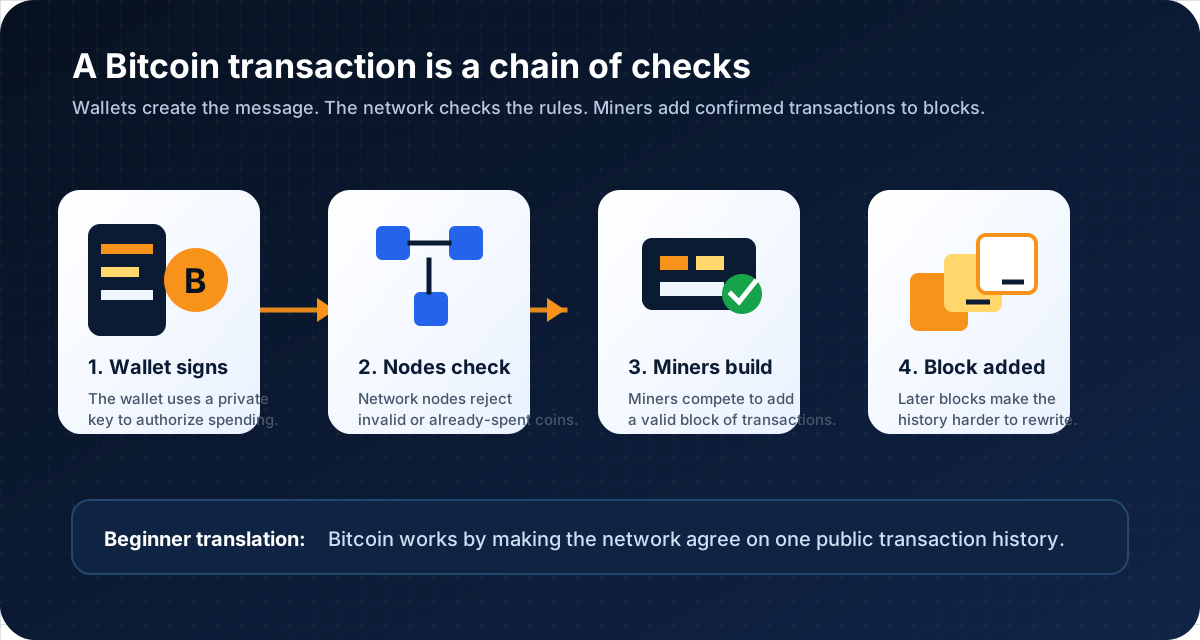
A Bitcoin transaction becomes useful only after the network checks it and miners add it to a valid block.
What Bitcoin is backed by and why people value it
The question "what is Bitcoin backed by" usually comes from a very reasonable instinct. We are used to money and financial products having something behind them: a government, a company, a bank balance, a commodity, a legal claim, or at least a customer support page with a password reset button.
Bitcoin does not fit neatly into that older drawer.
Bitcoin is not backed by gold. It is not issued by the U.S. government. It is not a bank deposit. It is not insured like an FDIC-insured bank account. No company promises to redeem one bitcoin for a fixed number of dollars.
So what is behind it?
In a practical sense, people value Bitcoin because of a bundle of features:
- Rules: the Bitcoin protocol defines how transactions, blocks, and issuance work.
- Scarcity: Bitcoin has a capped supply schedule that approaches 21 million bitcoin.
- Verification: anyone can run software to check whether the ledger follows the rules.
- Network use: wallets, nodes, miners, exchanges, merchants, developers, and holders create an ecosystem around it.
- Market demand: people buy and sell it in open markets, and that demand affects the price.
That last point is the sharp edge. If Bitcoin's value depends partly on what people are willing to pay for it, then the price can move hard in either direction. A scarce thing can still fall in price. A useful network can still have brutal volatility. A famous asset can still be used in scams.
This is where beginners sometimes get handed a cartoon version of the argument. One side says Bitcoin is "backed by nothing," as if that ends the topic. Another side says Bitcoin is "digital gold," as if that removes risk.
Both shortcuts are too smooth.
A calmer answer is this: Bitcoin is backed by its rules, cryptography, network verification, limited supply schedule, and market demand, but not by a government guarantee or a fixed redemption claim. That makes it different from a bank deposit, different from a stock, and different from a physical commodity.
Different does not mean better. It means you need the right map.
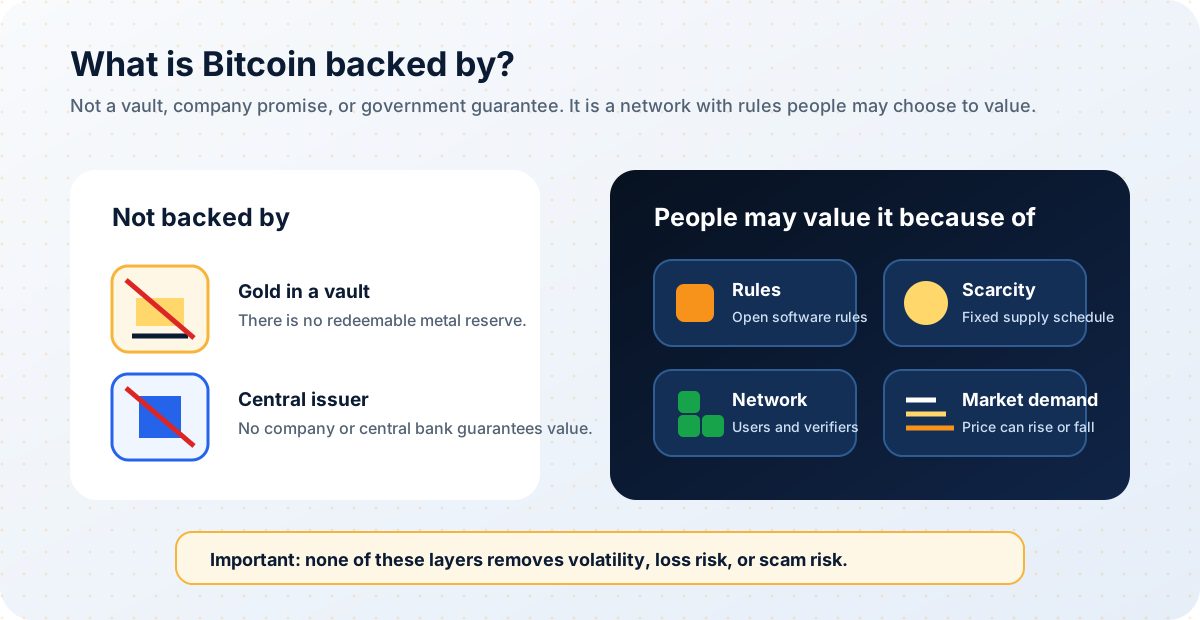
Bitcoin is not backed by a central issuer; its market value comes from rules, network use, scarcity, and demand.
Bitcoin supply, mining, and halving basics
Bitcoin's supply rule is one of the reasons people talk about it so much.
New bitcoin enters circulation through mining rewards. A miner that adds a valid block receives a block reward. That reward has two parts:
- the block subsidy, which is newly issued bitcoin
- transaction fees, which users pay to have transactions included in a block
The block subsidy is not decided in a meeting every Thursday by people wearing serious jackets. It follows Bitcoin's programmed issuance schedule. Roughly every 210,000 blocks, the subsidy is cut in half in an event called a halving.
As of May 21, 2026, the current block subsidy is 3.125 BTC per block, before transaction fees. This changed after the April 2024 halving. Anyone publishing this page later should verify the current subsidy, because Bitcoin's rules are predictable but the publication date is not.
Over time, the subsidy gets smaller. Eventually, Bitcoin's total supply approaches about 21 million bitcoin. That does not mean all bitcoin are easy to buy, evenly distributed, or permanently accessible. Some bitcoin may be held long term. Some may be lost. Some may move often. The 21 million number is about the protocol's maximum supply schedule, not about everyday market liquidity.
Mining is also not "free Bitcoin."
Mining requires specialized hardware, electricity, cooling, maintenance, operational skill, and exposure to bitcoin price changes. For most beginners, mining is not the normal starting point for learning Bitcoin. It is part of how the network works. It is not a simple home income machine.
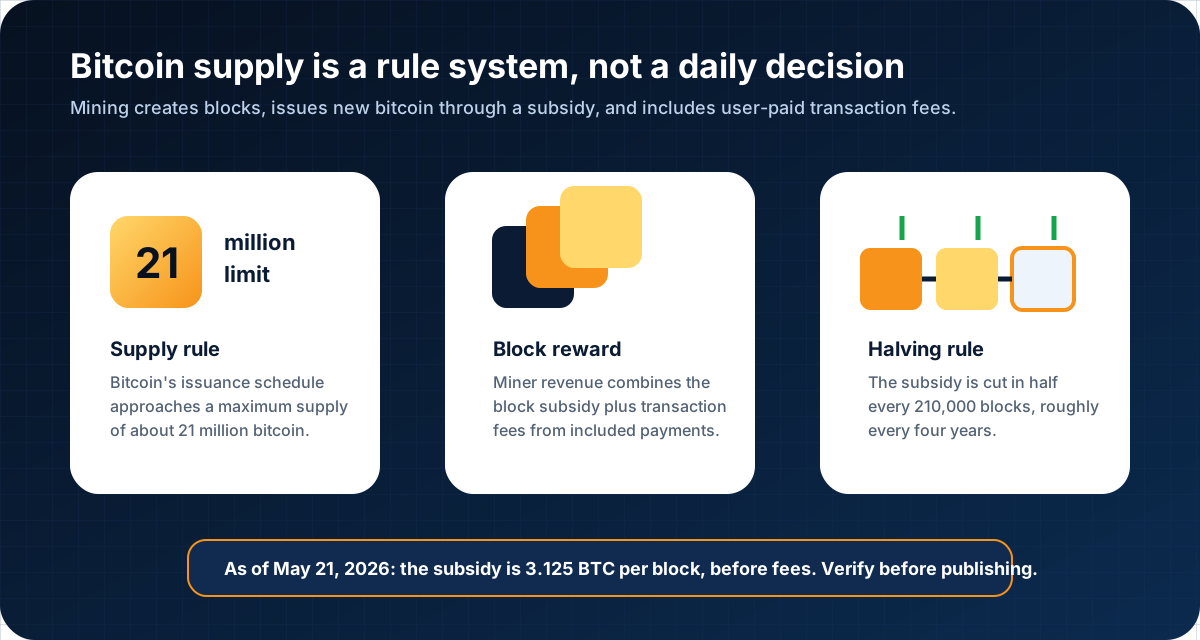
Mining rewards include a subsidy and fees; the subsidy follows Bitcoin's halving schedule.
What Bitcoin is used for
The phrase "what is Bitcoin used for" sounds simple, but it hides several different use cases.
People use Bitcoin for:
- holding a digital asset they can personally control, if they manage keys correctly
- sending value to another Bitcoin address
- receiving payments from someone else
- moving funds across services that support Bitcoin withdrawals and deposits
- learning about self-custody, public blockchains, and digital scarcity
- in some cases, paying merchants or service providers that accept Bitcoin
Those uses do not erase practical limits.
Bitcoin transactions can have fees. Confirmation times can vary. The recipient needs the correct address and network. Some platforms restrict deposits, withdrawals, regions, payment methods, or account features. Tax reporting may apply when you sell, trade, spend, or otherwise dispose of Bitcoin, depending on your country and situation.
Also, Bitcoin is not private in the way many beginners imagine. The blockchain is public. Addresses are not the same thing as legal names, but transaction history can be analyzed, and exchanges or payment services may collect identity information under their policies and local rules.
So the honest answer is: Bitcoin can be used as a digital asset and payment network, but using it well requires understanding fees, addresses, confirmations, custody, taxes, and platform rules.
It is not a magic anonymity cloak. It is a public ledger with keys.
Risks, limits, and common beginner misconceptions
This is the section that prevents the whole article from turning into a pretty diagram with a trapdoor underneath.
Beginners usually do not get hurt because they failed to memorize every technical term. They get hurt because they misunderstand one of the practical boundaries.
Misconception 1: Bitcoin is like money in a bank app
It can feel that way when you buy it through an exchange. There is a login, a balance, a chart, a button, and the general vibe of a finance app trying very hard to look calm.
But Bitcoin itself is not a bank account. If you withdraw bitcoin to your own wallet, custody changes. You become responsible for private keys and recovery phrases. If you lose them, share them, type them into a fake website, or store them carelessly, the loss can be irreversible.
Misconception 2: Bitcoin is anonymous
Bitcoin is better described as pseudonymous. Addresses appear on a public blockchain. The ledger does not show a person's name by default, but activity can sometimes be linked to real identities through exchanges, payment services, reused addresses, public posts, data leaks, or investigations.
Do not use Bitcoin to bypass laws, taxes, KYC requirements, platform rules, or security controls. That is not beginner education. That is how people create bigger problems for themselves.
Misconception 3: Mining is an easy way to get Bitcoin
Mining is part of Bitcoin's security model. It is not a beginner coupon machine.
A mining operation has costs, technical requirements, equipment risk, electricity exposure, and uncertain rewards. A person can learn how mining works without trying to become a miner.
Misconception 4: If Bitcoin has a limited supply, the price must go up
No.
Limited supply can be part of the value argument, but price also depends on demand, liquidity, regulation, macro conditions, market sentiment, security incidents, competition for attention, and the simple human talent for panic.
Scarcity is not a seatbelt.
Misconception 5: A transaction can always be fixed later
Bitcoin transactions are designed to settle without a central reversible payment authority. That can be useful, but it also means mistakes matter. Before sending bitcoin, check the address, network, amount, fee, and recipient instructions carefully.
For larger amounts, many users first send a small test transaction, but that still involves fees and does not eliminate all risk.
What beginners should understand before buying
Before buying Bitcoin, you do not need to become a cryptographer. You do need to understand the machine well enough to know where the sharp parts are.
Here is the pre-buying checklist:
- Volatility: Bitcoin's price can move sharply, and you can lose money.
- No guaranteed return: There is no promised yield, price floor, or profit path.
- Custody choice: Leaving bitcoin on a platform and withdrawing to a personal wallet create different risks.
- Private keys and recovery phrases: Never share them. Back them up offline. Loss can be permanent.
- Scams: Ignore guaranteed-return offers, urgent messages, fake support, fake wallet pages, and strangers asking you to "verify" a wallet.
- Platform rules: Check identity requirements, fees, limits, regional availability, and withdrawal policies before acting.
- Taxes: Selling, trading, spending, or disposing of Bitcoin may create tax reporting obligations. Check local rules or ask a qualified tax professional.
- Records: Keep transaction records, platform statements, wallet notes, and dates in a secure place.
This checklist is not here to scare you away from learning. It is here because the internet has a talent for making the risky part look like the boring part.
Which is backwards.
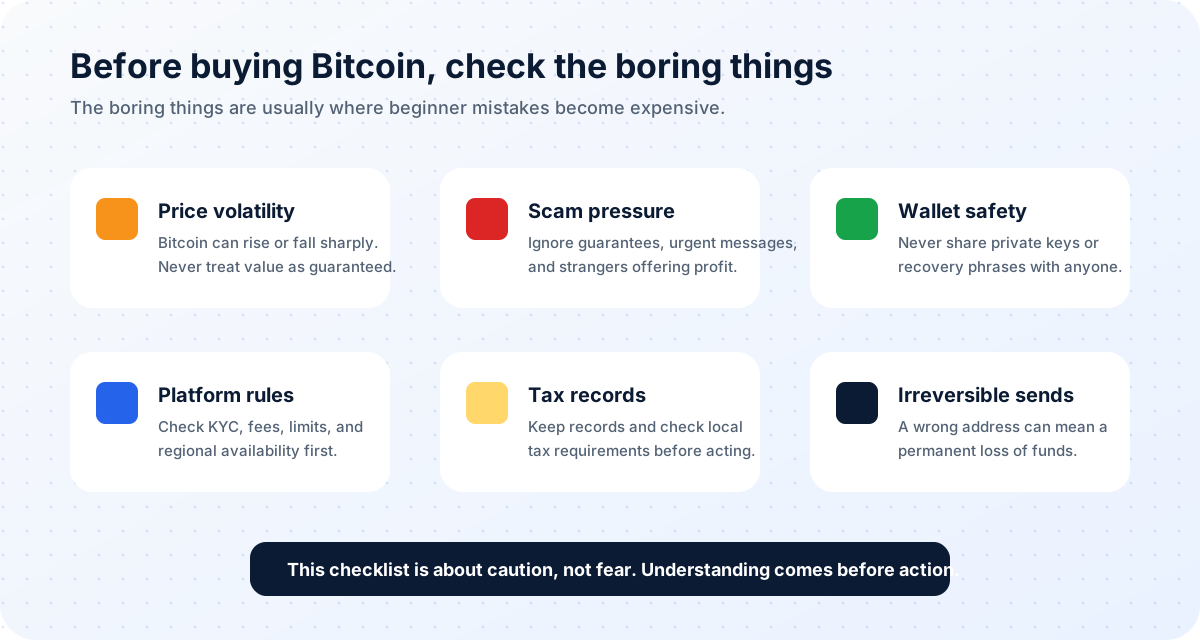
Before buying Bitcoin, understand volatility, custody, scams, platform rules, taxes, and irreversible sends.
Next steps: buy, store, send, or sell
If Bitcoin now feels slightly less foggy, good. That is the point of a basics page.
The next step depends on what you are trying to understand:
- If you want to see the practical purchase flow, read SatoABC's How to Buy Bitcoin guide.
- If you want to understand custody, read Bitcoin Wallets and Storage before moving funds off a platform.
- If you want to learn transfers, read How to Send Bitcoin and study addresses, fees, confirmations, and test transactions.
- If you want to cash out later, read How to Sell Bitcoin and check platform rules, bank withdrawal limits, records, and tax requirements.
- If you are still unsure, read the Risk Disclaimer first and slow down.
Buying is only one button in a much larger machine. A beginner's real job is not to press the button quickly. It is to understand what kind of machine the button belongs to.
FAQ
What is Bitcoin and how does it work?
Bitcoin is a digital asset and payment network that records transactions on a public blockchain. Wallets create signed transactions, nodes check whether those transactions follow Bitcoin rules, miners add valid transactions into blocks, and confirmations make the transaction history harder to rewrite.
How does Bitcoin work?
Bitcoin works by letting many computers agree on one shared transaction history. A wallet signs a transaction, nodes verify it, miners compete to add it to a block, and the accepted block becomes part of the blockchain.
What is Bitcoin backed by?
Bitcoin is not backed by gold, a company, or a government guarantee. People may value it because of its rules, cryptographic verification, limited supply schedule, network adoption, portability, and market demand. Its price can still fall sharply.
What is Bitcoin used for?
Bitcoin is used for holding a digital asset, sending and receiving value, learning self-custody, and in some cases paying merchants or moving funds between services that support Bitcoin. Use depends on fees, confirmations, wallet setup, platform rules, and local tax requirements.
How exactly do you make money from Bitcoin?
There is no guaranteed way to make money from Bitcoin. Some people profit only if they sell for more than their total cost after fees and taxes, while others lose money if the price falls, they mistime a trade, use risky leverage, lose keys, or fall for scams. This article is educational and does not recommend buying, selling, or trading Bitcoin.
How much is $1 Bitcoin in U.S. dollars?
Bitcoin's price changes constantly. If someone says "$1 of Bitcoin," they usually mean one U.S. dollar worth of a small fraction of one bitcoin at the current market quote. Check a current price source before acting, and remember that quotes, fees, spreads, and timing can differ by platform.
Risk Disclaimer
This article is for beginner education only. It is not financial, investment, tax, legal, or security advice. Bitcoin and other crypto assets can be volatile, and you can lose money. Do not treat any explanation here as a recommendation to buy, sell, mine, hold, or use Bitcoin. Always verify current platform rules, fees, limits, regional availability, wallet instructions, and local tax requirements before acting.
Editorial Attribution
Written by Alex Chen. Reviewed by Jordan Blake for factual accuracy, clarity, and beginner safety.