
Bitcoin mining is often described as "earning bitcoin with computers," but that is only a small and sometimes misleading part of the story. For beginners, the better question is: what role does mining play in how Bitcoin works?
Bitcoin mining is the process that helps confirm transactions, add new blocks to the Bitcoin blockchain, and release new bitcoin according to Bitcoin's programmed rules. You do not need to mine Bitcoin before you can learn about it, buy it, store it, send it, or sell it.

Mining helps Bitcoin organize transactions into blocks.
Mining in one sentence
Bitcoin mining is the competitive process where miners use specialized computers to create valid blocks of transactions and prove that real computational work was done.
In plain English: miners help Bitcoin agree on the next page of its public transaction history.
Mining is not a separate app, a passive income button, or a required beginner step. It is part of Bitcoin's design for keeping a shared ledger without relying on one central company or bank.
Why Bitcoin needs miners
Bitcoin does not have a bank, payment processor, or central database owner deciding which transactions are final. Instead, the network uses rules.
A Bitcoin user creates a transaction and broadcasts it to the network. Nodes check whether the transaction follows Bitcoin's rules, such as whether the coins being spent are valid and not already spent. Miners then gather valid transactions into a candidate block and compete to add that block to the blockchain.
This process is easier to understand as a sequence: a transaction is created, checked by nodes, grouped by miners, and confirmed when a valid block is added to the blockchain.
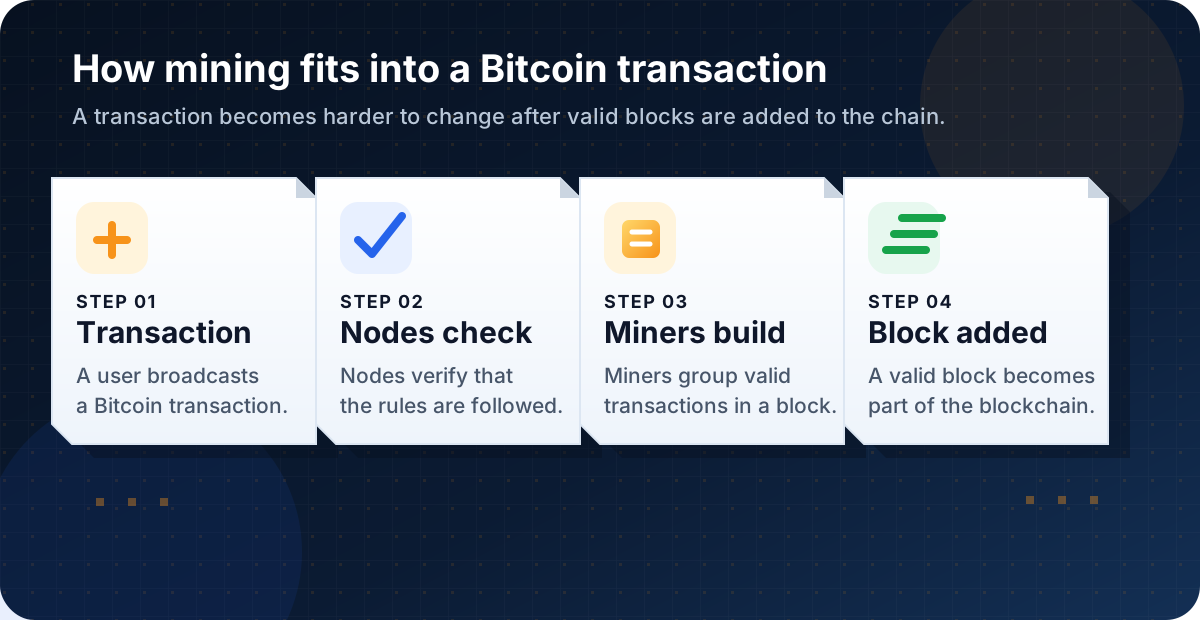
Transactions become confirmed when valid blocks are added.
This competition uses proof-of-work. A miner repeatedly tries to find a valid block hash that meets the current difficulty target. Finding that hash takes many attempts, but once a miner finds one, other nodes can check it quickly.
Mining helps Bitcoin solve a basic digital money problem: double spending. If the same bitcoin could be spent twice, the system would not be reliable. Mining helps create a time-ordered chain of blocks so the network can agree on which valid transactions came first.
Miners are important, but they do not control Bitcoin by themselves. If a miner creates a block that breaks Bitcoin's rules, nodes can reject it.
Blocks, rewards, and transaction fees
A Bitcoin block is a batch of transactions. When a valid block is accepted by the network, the transactions inside that block receive a confirmation.
The miner who produces an accepted block can receive a block reward. A Bitcoin block reward has two parts: the block subsidy and transaction fees. The subsidy is newly issued bitcoin, while transaction fees are paid by users whose transactions are included in the block.
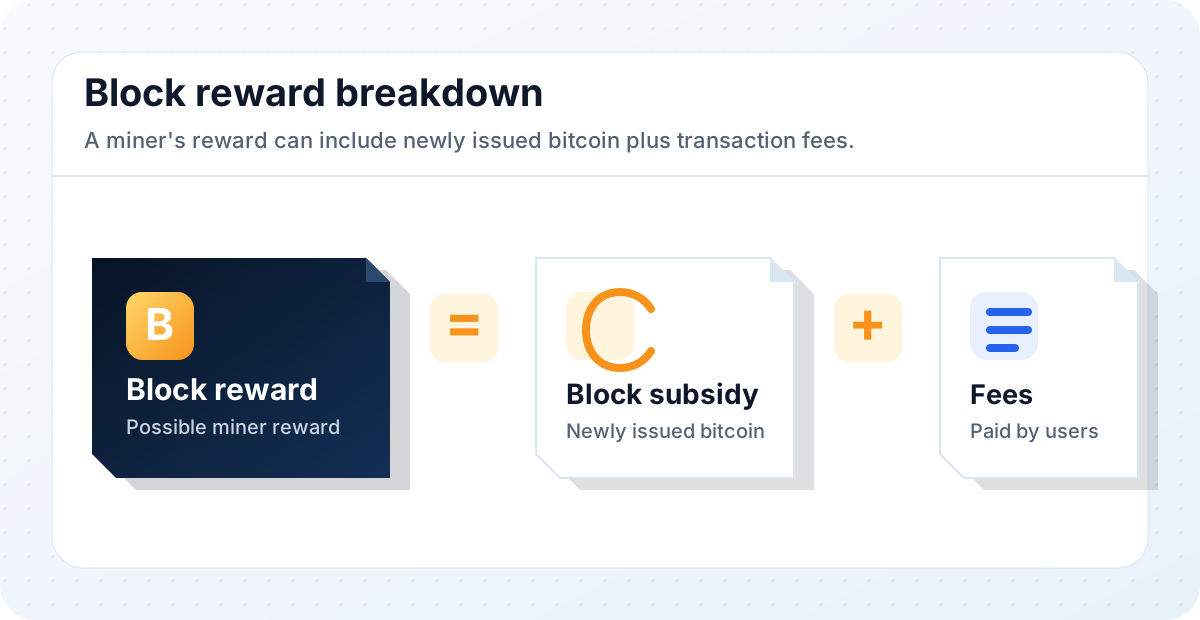
A block reward has two parts: subsidy and fees.
This is how new bitcoin enters circulation. Bitcoin does not create new coins through a company decision, app balance update, or central bank policy. New issuance follows Bitcoin's programmed schedule.
As of May 21, 2026, the block subsidy is 3.125 BTC per block, following the April 2024 halving. This should be checked again before publication because the article may stay online for years.
Transaction fees are different from the subsidy. Fees can change based on network demand, wallet settings, and miner selection. No beginner guide should promise a specific fee, confirmation time, or transaction outcome.
Mining difficulty and halving
Bitcoin is designed so blocks are found at an average pace of about one block every ten minutes. Individual blocks can arrive faster or slower, but the long-term target is roughly ten minutes.
Mining difficulty is the rule that helps keep this pace stable. If miners add more computing power and blocks are found too quickly, difficulty can increase. If mining power falls and blocks are found too slowly, difficulty can decrease. Bitcoin adjusts difficulty roughly every 2,016 blocks.
Difficulty and halving are related to mining, but they do different jobs. Difficulty helps regulate block timing, while halving reduces the new bitcoin portion of the block reward.
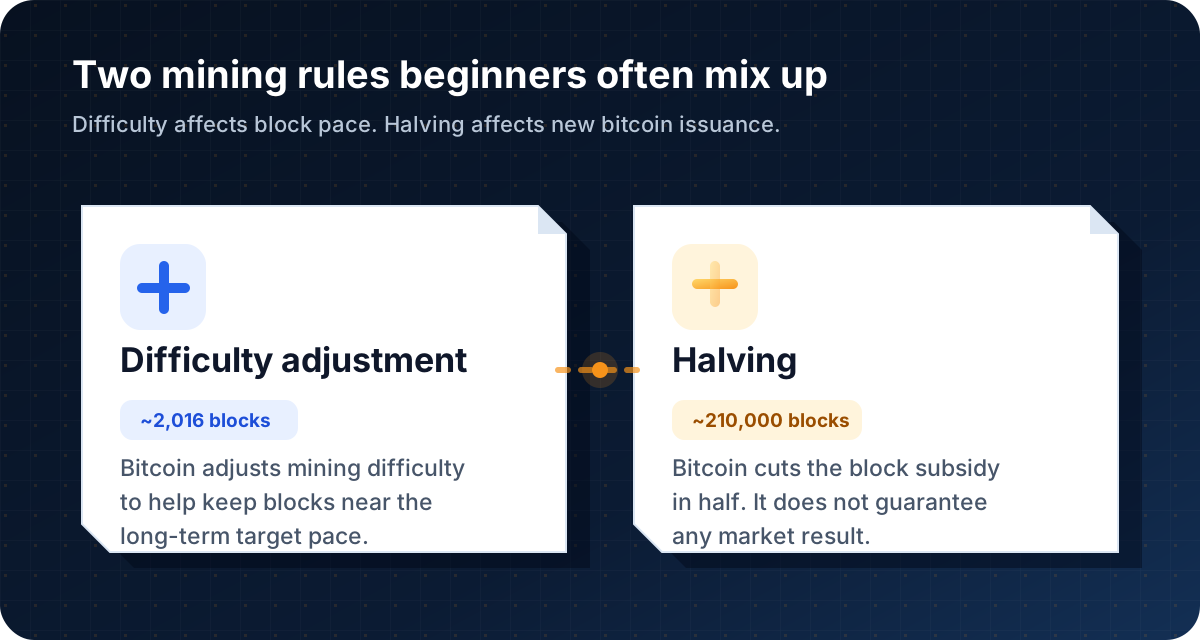
Difficulty targets block pace; halving reduces the subsidy.
This is why more mining computers do not simply create unlimited bitcoin. More mining power can make mining more competitive, but Bitcoin's rules adjust the difficulty and keep issuance on schedule over time.
Bitcoin halving is related to mining because it reduces the block subsidy. A halving happens about every 210,000 blocks, or roughly every four years. The most recent halving occurred in April 2024 and reduced the subsidy from 6.25 BTC to 3.125 BTC.
Halving slows the rate at which new bitcoin enters circulation. It does not guarantee a price increase, mining profit, or any particular market result.
Do beginners need to mine Bitcoin?
No. Most beginners do not need to mine Bitcoin.
Mining is not required to understand Bitcoin basics, buy Bitcoin, use a wallet, send Bitcoin, or sell Bitcoin. For most new users, it is more useful to first understand transactions, wallet security, private keys, exchange account risks, and Bitcoin's price volatility.
Bitcoin mining today often involves specialized ASIC hardware, electricity costs, heat, noise, maintenance, pool rules, tax questions, and local regulations. Rewards are uncertain, and costs can exceed rewards.
Some miners join mining pools, where participants combine computing power and share payouts according to the pool's rules. Pool fees, payout thresholds, identity requirements, regional access, and tax treatment can vary. Anyone considering mining should check current official policies and local requirements before acting.
For a beginner, mining is better treated as an advanced operational topic, not a first step.
Risks and misconceptions
A common misconception is that mining is "free Bitcoin." It is not. Mining involves hardware, electricity, maintenance, technical setup, and changing network conditions.
Another misconception is that mining is the same as buying Bitcoin. Buying Bitcoin means acquiring BTC from another person or platform. Mining means competing to add blocks to the Bitcoin blockchain. They are different activities with different risks.
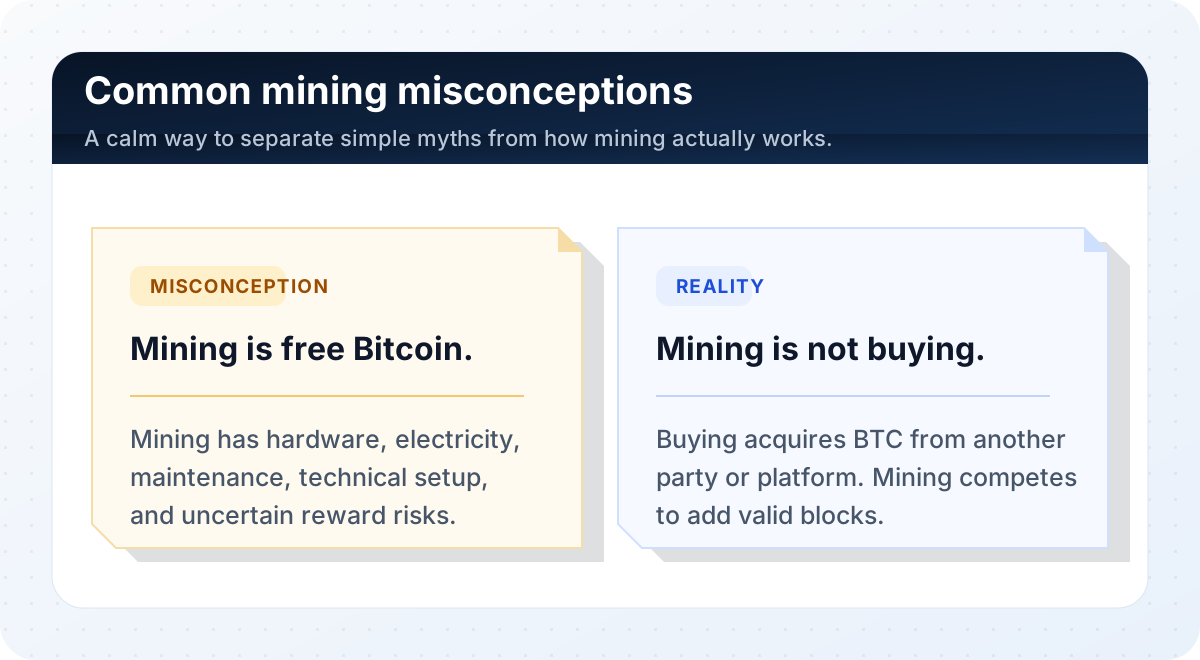
Mining has costs, rules, and uncertain rewards.
Mining also does not let miners create any amount of bitcoin they want. The block reward follows Bitcoin's rules, and invalid blocks can be rejected by nodes.
Energy use is another topic where beginners should be careful. Bitcoin mining consumes electricity, but specific estimates change and depend on methodology. If a page includes energy numbers, it should cite a current source such as the Cambridge Bitcoin Electricity Consumption Index and explain that estimates are not exact.
Finally, mining does not remove normal Bitcoin safety responsibilities. If you own bitcoin, wallet security still matters. Never share a private key or seed phrase. Keep recovery information backed up offline. If you lose access to a self-custody wallet, the loss may be irreversible.
If you are comparing ways to get Bitcoin exposure after learning mining, the beginner guide to Bitcoin ETFs and the guide to Bitcoin wallet addresses cover two very different next steps.
FAQ
Can you mine Bitcoin at home?
Technically, yes, but it is usually not practical for beginners. Modern Bitcoin mining often requires specialized hardware, electricity planning, cooling, and maintenance. Home mining may also create heat and noise, and rewards are uncertain.
Does Bitcoin mining create new Bitcoin?
Yes. New bitcoin enters circulation through the block subsidy, which is part of the block reward. Miners may also receive transaction fees from transactions included in the block.
Is mining the same as buying Bitcoin?
No. Mining means competing to add valid blocks to the blockchain. Buying Bitcoin means acquiring BTC from another person or platform. You can learn about Bitcoin or buy Bitcoin without mining.
What is Bitcoin halving?
Bitcoin halving is the programmed event that cuts the block subsidy in half about every 210,000 blocks. It affects new bitcoin issuance, but it does not guarantee any price movement or profit.
Does mining make Bitcoin transactions instant?
No. Mining is part of how transactions become confirmed, but confirmation timing can vary. Wallets and platforms may also require different numbers of confirmations.
Risk Disclaimer
This article is for educational purposes only and is not financial, investment, tax, legal, or mining business advice. Bitcoin is volatile, mining rewards are uncertain, and mining costs can exceed rewards. Always do your own research, protect private keys and seed phrases, and check current platform rules, local regulations, and tax requirements before acting.
Editorial Attribution
Written by Alex Chen. Reviewed by Jordan Blake for factual accuracy, clarity, and beginner safety.