
A Bitcoin ETF is a stock-market-style product that lets investors get exposure to Bitcoin's price without directly buying BTC into a Bitcoin wallet. The important catch is that an ETF share is not the same thing as owning on-chain bitcoin: you own a share of a financial product, not the private keys to BTC.
That is the small sentence beginners need before everything gets noisy.
Because the noise is impressive. A person hears "Bitcoin ETF," sees familiar brokerage language, recognizes a large asset manager's name, and the brain quietly relaxes. It feels like Bitcoin has put on a suit and learned how to speak in retirement-account sentences.
But the wrapper and the thing inside the wrapper are not the same.
This page uses "Bitcoin ETF" the way most beginners use it: a shorthand for exchange-traded products that provide Bitcoin exposure. The exact legal structure can vary, especially in the U.S., where spot Bitcoin products are often exchange-traded commodity trusts rather than traditional ETFs registered under the Investment Company Act of 1940. You do not need to become a securities lawyer to understand the beginner point.
You do need to know which layer you are touching.

A Bitcoin ETF can provide market exposure without putting BTC in your personal wallet.
What a Bitcoin ETF is
A Bitcoin ETF is an exchange-traded investment product designed to give investors exposure to Bitcoin's price through a brokerage account.
Instead of opening a crypto exchange account, creating a Bitcoin wallet, handling a Bitcoin address, and protecting a recovery phrase, a person may buy shares of a product that trades on a securities exchange. The shares can often be bought or sold through a regular brokerage account during market hours, depending on the broker and product.
The beginner model is simple:
Bitcoin itself is the underlying asset or reference point.
The ETF or ETP is the financial wrapper.
Your brokerage account records your shares of that wrapper.
This can make Bitcoin exposure feel easier to access for people already familiar with brokerage accounts. It can also hide some details that matter.
An ETF wrapper does not make Bitcoin calm. It does not remove volatility. It does not turn Bitcoin into a bank deposit. It does not promise profit. It does not mean you can withdraw BTC to a wallet.
It means you are getting exposure through a market product.
That distinction sounds small until you need to know what you actually own.
Spot Bitcoin ETF vs futures Bitcoin ETF
A spot Bitcoin ETF and a futures Bitcoin ETF can both be linked to Bitcoin, but they work through different machinery.
A spot Bitcoin ETF or spot Bitcoin ETP seeks to track Bitcoin's price by holding bitcoin through the product's custody structure. Investors buy shares of the product, while the product or trust holds bitcoin through its own arrangements.
A futures Bitcoin ETF seeks exposure through Bitcoin futures contracts. A futures contract is not the same thing as holding bitcoin. It is a contract tied to a future price or settlement process, and the fund may need to manage contract rolls, collateral, and other futures-market mechanics.
For beginners, the difference is this:
Spot exposure points more directly at bitcoin held by the product.
Futures exposure points at contracts linked to Bitcoin's price.
Both can move differently from the simple mental picture of "I own BTC."
This is why the phrase "bitcoin etf" is not enough. A ticker symbol and a clean app screen do not tell you the whole structure. The official prospectus and product page matter.
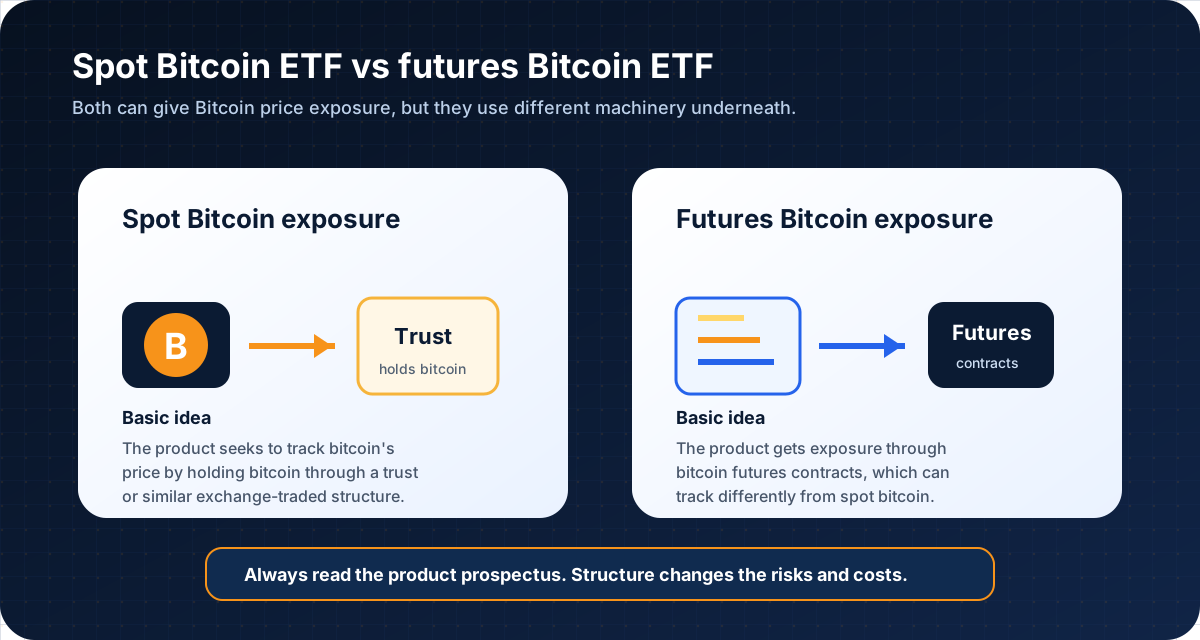
Spot and futures Bitcoin products can both track Bitcoin, but they use different structures.
ETF exposure vs owning Bitcoin directly
The most useful question is not "Is an ETF real Bitcoin?" It is: which kind of exposure are you choosing?
Buying a Bitcoin ETF share is like buying a financial receipt connected to Bitcoin exposure. Buying BTC directly is like taking possession of the asset on the Bitcoin network, if you later withdraw it to a wallet you control.
The two paths solve different problems.
An ETF can fit people who want brokerage-account access, familiar statements, possible retirement-account compatibility, and no direct wallet management. But it also means you rely on the brokerage account, product structure, market hours, issuer disclosures, custodial arrangements, and product rules.
Direct Bitcoin ownership can fit people who want to use Bitcoin on-chain, withdraw BTC, send BTC, hold it in a personal wallet, or learn self-custody. But it also means handling addresses, fees, confirmations, private keys, recovery phrases, wallet backups, and irreversible mistakes.
One path is not automatically better.
They are different tools.
The mistake is using one tool while imagining you are using the other.

ETF exposure and direct Bitcoin ownership solve different problems and create different responsibilities.
Fees, custody, wallets, and taxes
A Bitcoin ETF can remove some wallet tasks from the beginner's plate, but it adds product-level details.
First, look at fees. A product may have an expense ratio, and your brokerage may have trading costs, spreads, or account-level fees. Fees can change by product and by broker. Do not assume a product is cheap because it looks simple in an app.
Second, look at custody. With a spot product, the product's bitcoin is held through a custody arrangement described in its filings and prospectus. You are not personally backing up the product's private keys. That may feel easier, but it also means you are relying on the product's custody structure rather than controlling the BTC yourself.
Third, look at wallets. In most ordinary cases, you do not need a Bitcoin wallet to buy a Bitcoin ETF share. You need a brokerage account that supports the product. But this also means you usually cannot send the ETF share to a Bitcoin address or withdraw BTC from it.
Fourth, look at taxes. ETF shares and direct BTC can have different reporting paths, records, and tax treatment depending on your country, account type, and transaction history. This article is not tax advice. Before acting, check official tax guidance or ask a qualified tax professional.
The wrapper moves the work around. It does not make the work disappear.
When a Bitcoin ETF is not the same as self-custody
Self-custody means you control the keys to a Bitcoin wallet. If you control the private keys or recovery phrase, you control the ability to move the BTC. That comes with power and a very unfriendly downside: if you lose the keys, share them, or enter them into a fake website, the loss can be permanent.
A Bitcoin ETF is different.
With ETF exposure, your brokerage account shows shares. Those shares may track Bitcoin's price, but they are not spendable bitcoin. You cannot usually use them to pay a Bitcoin invoice, send BTC to a friend, move BTC to cold storage, or test a Bitcoin transaction.
This matters if your real goal is learning how Bitcoin works on-chain.
If you only want price exposure through a brokerage account, an ETF may be the thing you are trying to understand. If you want to use Bitcoin as Bitcoin, then wallet basics still matter.
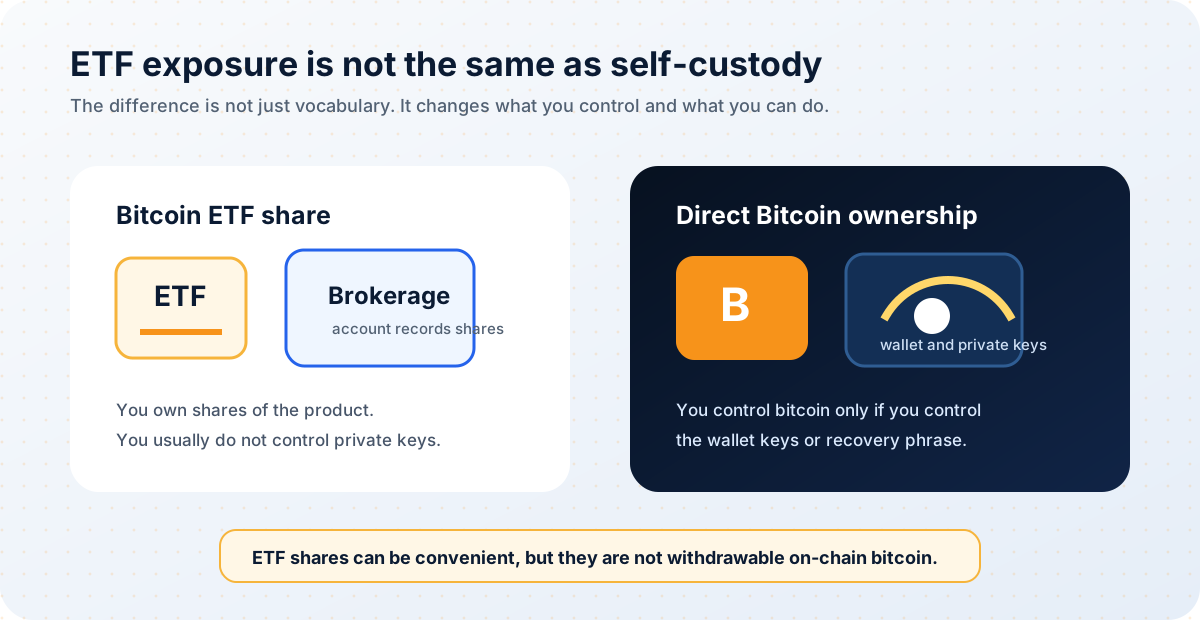
ETF shares can track Bitcoin exposure, but they are not withdrawable on-chain BTC.
Risks, limits, and common misconceptions
The first misconception is that a Bitcoin ETF makes Bitcoin safe. It does not. The product wrapper may change access, custody, and reporting, but the value can still move sharply because Bitcoin itself is volatile.
The second misconception is that approval means endorsement. Regulatory approval to list or trade a product is not the same as a regulator telling you the asset is a good investment. The SEC has repeatedly warned investors to weigh risks carefully with crypto-asset products.
The third misconception is that all Bitcoin ETFs work the same way. They do not. Spot products, futures products, trusts, expense ratios, liquidity, premiums or discounts, custody arrangements, and broker availability can differ.
The fourth misconception is that an ETF share means you own BTC in your own wallet. In normal beginner terms, it means you own shares of the product through your brokerage account. That is a different kind of ownership.
The fifth misconception is that a Bitcoin ETF removes the need for records. You still need records. Brokerage statements, tax forms, trade confirmations, account history, and cost basis can matter.
The cleanest beginner rule is this:
If you cannot explain what the product holds, what fee it charges, where the exposure comes from, whether you can withdraw BTC, and what account records you will receive, you are not ready to compare it carefully.
Beginner comparison checklist
Before using any Bitcoin ETF or similar product, check the official product page, prospectus, and your broker's current rules.
Use this checklist:
Product type: Is it spot exposure, futures exposure, a trust, or another exchange-traded product structure?
Underlying exposure: Does it hold bitcoin, futures contracts, or something else?
Fees: What is the expense ratio, and are there brokerage costs, spreads, or other account fees?
Premium or discount: Can the product trade above or below the value of its underlying holdings?
Custody: Who holds the bitcoin or contracts behind the product, and what does the prospectus say about custody risk?
Wallet access: Can you withdraw BTC? For most ETF-style products, the answer is no.
Trading access: Can your broker support the product, and what market hours or account restrictions apply?
Taxes: What records will you receive, and what local tax rules may apply?
Volatility: Are you prepared for the product's value to move sharply with Bitcoin's price?
Do not choose based only on a brand name, a ticker, a fee headline, or a social media post. The boring documents are where the product tells you what it actually is.
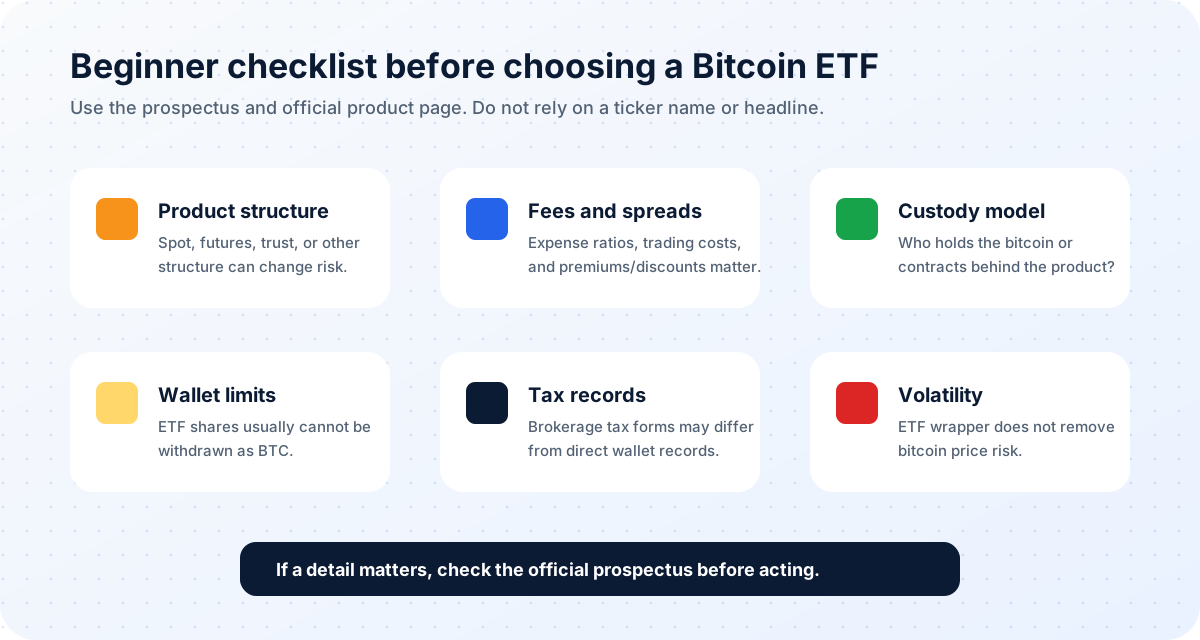
Compare structure, fees, custody, wallet limits, tax records, and volatility before acting.
Next steps: ETF, Bitcoin, or wallet basics
If you are trying to decide between a Bitcoin ETF and direct Bitcoin ownership, do not start with the product name. Start with the job you want done.
If you want brokerage exposure and do not want to handle wallet keys, learn how the ETF or ETP structure works and read the product's official documents.
If you want to buy and hold BTC directly, read SatoABC's [How to Buy Bitcoin](/how-to-buy/how-to-buy-bitcoin) guide and then study Bitcoin Wallets and Storage before moving funds off a platform.
If you are still unclear on why Bitcoin has a market price at all, go back to How Does Bitcoin Work? first. The ETF wrapper is easier to understand once the underlying machine is less foggy.
The button in your brokerage app may look simple.
The product behind it is the part worth understanding.
FAQ
Is a Bitcoin ETF real Bitcoin?
A Bitcoin ETF or similar exchange-traded product can provide exposure to Bitcoin's price, but an ETF share is not the same as holding BTC in your own Bitcoin wallet. You own shares of the product through a brokerage account, not private keys to on-chain bitcoin.
Do I need a wallet for a Bitcoin ETF?
Usually, no. A Bitcoin ETF is typically bought through a brokerage account, not a Bitcoin wallet. If you want to hold BTC directly or send Bitcoin on-chain, then wallet basics matter.
Can I withdraw BTC from a Bitcoin ETF?
In normal retail use, no. Bitcoin ETF shares generally cannot be withdrawn as BTC to a personal wallet. Check the product prospectus and broker rules before assuming any feature is available.
What is the difference between a spot Bitcoin ETF and a futures Bitcoin ETF?
A spot Bitcoin product seeks exposure by holding bitcoin through the product's custody structure. A futures Bitcoin ETF gets exposure through Bitcoin futures contracts. Futures products can behave differently because contracts, rolls, collateral, and market structure affect performance.
Is a Bitcoin ETF safer than buying Bitcoin directly?
Do not treat it as automatically safer. A Bitcoin ETF may reduce some direct wallet risks, but it introduces product, brokerage, market, fee, custody, tracking, and regulatory risks. Bitcoin price volatility still matters.
Does a Bitcoin ETF mean the SEC recommends Bitcoin?
No. Regulatory approval to list or trade a product is not an investment recommendation or a statement that Bitcoin is suitable for you. Read official investor education materials and the product prospectus before acting.
Risk Disclaimer
This article is for beginner education only. It is not financial, investment, tax, legal, or security advice. Bitcoin, Bitcoin ETFs, and other crypto-asset products can be volatile, and you can lose money. Do not treat any explanation here as a recommendation to buy, sell, hold, or avoid any Bitcoin ETF, ETP, crypto asset, security, or financial product. Always verify current official documents, fees, product structure, broker rules, custody details, regional availability, and local tax requirements before acting.
Editorial Attribution
Written by Alex Chen. Reviewed by Jordan Blake for factual accuracy, clarity, and beginner safety.