
Finding where to buy Bitcoin sounds like choosing a store. For a beginner, it is closer to choosing a doorway.
The doorway matters because the platform sits between your money, your account, your identity checks, your transaction records, and sometimes your ability to withdraw BTC to a wallet. There is no single "best place to buy Bitcoin" for everyone. A better first question is: which platform can you verify, understand, and use without being rushed?
Most beginners buy bitcoin online through a crypto exchange, brokerage-style app, payment app, wallet app partner, or Bitcoin ATM operator. The safer path is not the one with the loudest ad or the most confident ranking. It is the one where the official website or app is clear, the platform is available in your region, fees and limits are visible, identity requirements are honest, security tools are present, and withdrawal rules are understandable before you purchase Bitcoin.
That is the whole article in miniature.
Now we can slow down and inspect the doorway.

Choosing where to buy Bitcoin starts with checking the venue, not chasing a ranking.
Common places beginners buy Bitcoin
When people ask where to buy Bitcoin, they usually mean one of five buying venues.
A crypto exchange is a platform built for buying, selling, and sometimes withdrawing crypto assets. Exchanges often support bank transfers, cards, trading screens, order history, and BTC withdrawals, depending on the platform and region. They can be useful for beginners who want a clearer path from purchase to self-custody later, but the interface may feel busy at first.
A brokerage or investing app may let users buy Bitcoin exposure or crypto assets inside a familiar financial account. The tradeoff is that features can vary widely. Some apps allow BTC transfers to an external wallet. Some do not. Some provide direct crypto ownership. Some provide exposure through another structure. Read the current product description before assuming what you own.
A payment app can make buying feel simple because the app is already connected to a payment method. Simplicity is nice. It can also hide details. Check fees, spreads, limits, transfer rules, account records, and whether you can move BTC out of the app.
A wallet app with a buying partner may let users purchase Bitcoin through a third-party provider. This can be convenient if your goal is to end up with BTC in a wallet, but you still need to check the provider, fees, KYC rules, limits, and support route. A wallet interface does not automatically make the buying partner suitable for you.
A Bitcoin ATM or kiosk may allow a cash or card purchase in a physical location. Fees and limits can differ from online platforms, and scam risks can be higher when someone is pressuring you to use a machine. A beginner should be especially cautious if another person is instructing them to buy crypto at an ATM.
Some people also use peer-to-peer or in-person methods. For complete beginners, these are usually harder to verify and easier to misunderstand. If you do not know how to evaluate identity, payment finality, escrow rules, wallet addresses, and local legal requirements, this is not the calmest first lesson.
The point is not that one category wins.
The point is that each category moves the risk to a different place.
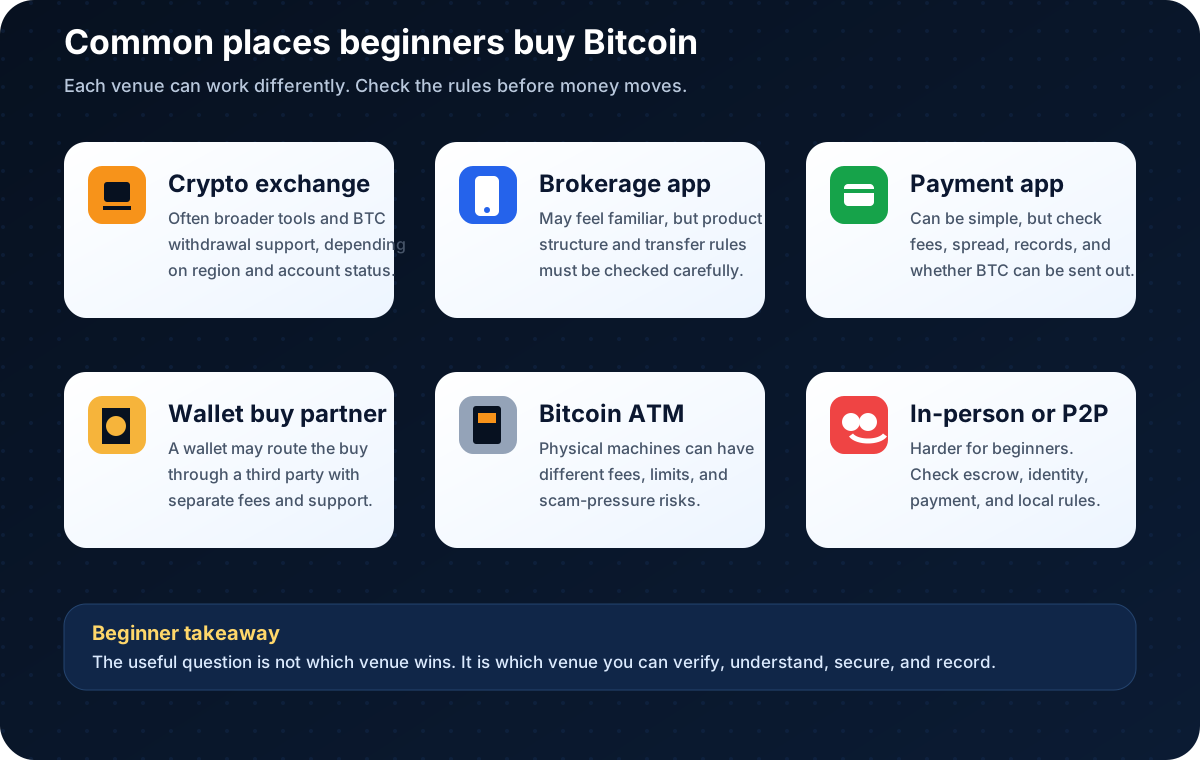
Different buying venues can solve different problems, but each one needs its own checks.
How to evaluate a platform
The phrase "best place to buy bitcoin" is a little trap. It sounds like there is a scoreboard somewhere with one winner at the top.
There is no useful universal scoreboard for a beginner. A platform can be available in one state and restricted in another. One payment method may be cheap on one platform and expensive on another. One app may be simple but not support BTC withdrawals. One exchange may have better tools but a more confusing interface. Fees, limits, and identity requirements can change.
So treat "best" as a checklist, not a crown.
Before using any platform, check these signals:
Official access: Type the URL yourself or use the official app store listing. Avoid links from ads, direct messages, comment sections, or strangers in chat groups.
Regional availability: Confirm the platform can legally serve your country, state, or region.
Identity requirements: Understand what verification is required before you deposit, buy, sell, or withdraw.
Fees and spread: Look for trading fees, instant-buy fees, card fees, deposit fees, withdrawal fees, and any spread between quoted and market prices.
Limits and holds: Check minimums, maximums, payment holds, withdrawal holds, and account-level restrictions.
BTC withdrawal access: If you may want a personal wallet later, confirm whether the platform allows on-chain Bitcoin withdrawals.
Security controls: Look for two-factor authentication, device management, login alerts, withdrawal allowlists, and anti-phishing tools where available.
Records and support: Make sure you can access transaction history, statements, tax records, help articles, and official support.
If a platform is attractive only because someone says it is easy money, pause. A real buying venue should be boring enough to explain itself.
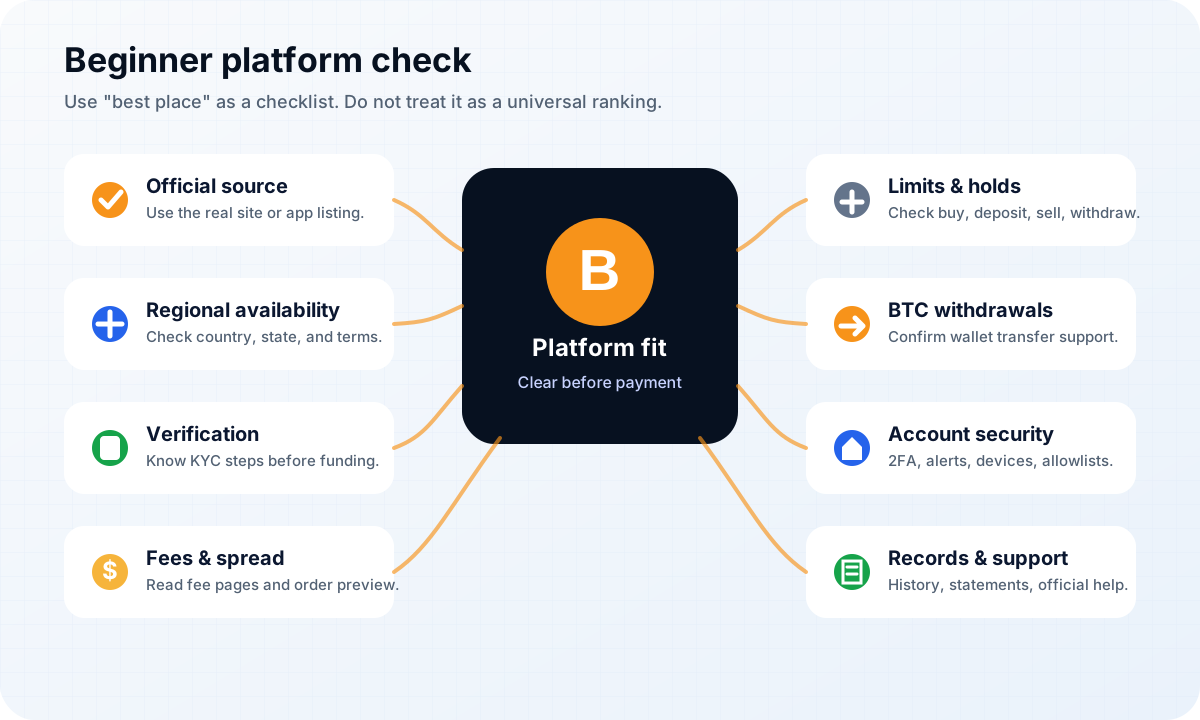
A beginner-friendly platform is one whose rules can be checked before money moves.
Fees, limits, and withdrawal access
Fees are not one thing. They are a small group of creatures wearing the same jacket.
When you buy Bitcoin online, you may run into:
A trading fee or instant-buy fee
A spread in the quoted buy price
A card, bank, or payment processing fee
A deposit or funding fee
A BTC withdrawal fee
A Bitcoin network fee when moving BTC on-chain
This article does not list current platform fees because fees change. Check the platform's official fee page before acting. Also check the final order preview before you confirm any purchase. The preview is where the platform usually shows the amount you spend, the estimated BTC you receive, and any visible fee or total.
Limits are the next quiet detail. A platform may limit how much you can buy, deposit, sell, or withdraw. Limits can depend on region, payment method, identity verification level, account history, risk review, and current platform policy.
Withdrawal access deserves its own spotlight. Some beginners buy Bitcoin because they want to learn self-custody later. If that is your goal, do not wait until after the purchase to discover whether the platform lets you withdraw BTC to a Bitcoin wallet.
There are three separate questions:
Can you buy BTC on the platform?
Can you withdraw BTC to a Bitcoin address?
Are there holds, limits, fees, or extra verification steps before withdrawal?
Those are not the same question.
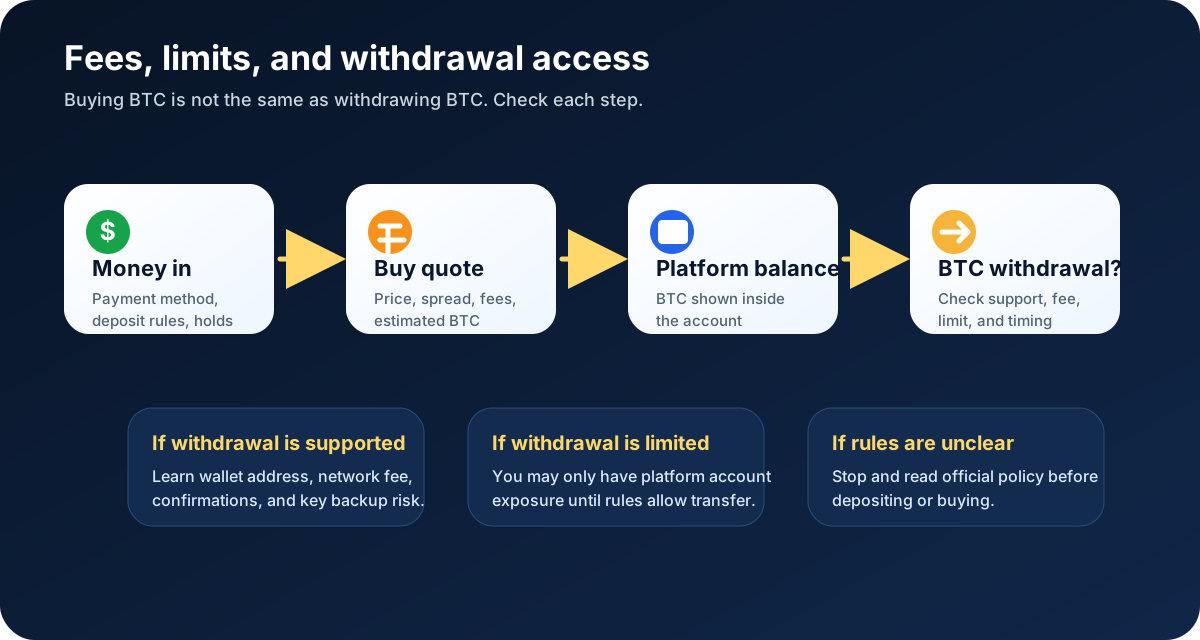
Before you purchase Bitcoin, know what happens after the buy screen.
Security and verification checks
Most mainstream platforms require identity verification for some or all buying, selling, deposit, withdrawal, or account-limit features. This is normal for many regulated financial platforms. It is not a puzzle to bypass.
Do not use fake information, a borrowed identity, someone else's account, a VPN to misrepresent your location, or edited documents to get around platform rules. That can lead to account restrictions, compliance reviews, loss of access, legal problems, or failed withdrawals.
Use the official flow only:
Visit the official website or official app store listing.
Check the domain before logging in.
Download apps only from the official App Store or Google Play listing for your region.
Turn on two-factor authentication.
Use a strong, unique password.
Do not share login codes, recovery codes, private keys, or seed phrases.
Do not let anyone "remote control" your account to help you buy.
Keep your own transaction records.
If the platform asks you to verify identity, read the official help page first. If something fails, use official support. A stranger in a social app who claims they can "unlock" your exchange account is not support. They are a new problem wearing a headset.
Also separate a platform account from a Bitcoin wallet. A platform account is controlled through your login and the platform's rules. A self-custody wallet is controlled by private keys or a recovery phrase. If you ever use a wallet, never share the seed phrase, store an offline backup, and understand that losing it can mean permanent loss.
Red flags and fake platforms
Fake Bitcoin buying platforms often borrow the surface of trust: clean screens, polite support agents, familiar logos, fake reviews, screenshots of large balances, and language that sounds official enough if you are tired.
The safe-looking trap is still a trap.
Consumer protection agencies have warned for years that crypto scams often use pressure, impersonation, guaranteed-return claims, romance or friendship manipulation, fake investment dashboards, and requests to send crypto to unlock money. The details change. The shape is old.
Watch for these red flags:
A platform or person promises guaranteed profit, risk-free returns, or unusually high yield.
Someone says you must buy Bitcoin immediately to avoid missing out.
A stranger, "advisor," romantic contact, or support agent tells you exactly where to buy and where to send the BTC.
You are asked to pay a tax, fee, deposit, or "release charge" in crypto before you can withdraw money.
The website domain is misspelled, new, hidden behind a short link, or different from the official brand domain.
The app is sent as a file download instead of an official app store listing.
Support only happens through Telegram, WhatsApp, Discord, social media DMs, or email addresses that do not match the official domain.
Reviews look copied, overly perfect, or impossible to verify.
The platform will not explain fees, limits, withdrawals, legal entity, or support contact details.
Someone asks for your password, login code, private key, seed phrase, ID photo through chat, or screen-sharing session.
If any of these appear, stop. Do not send more money to test whether the problem goes away. It usually does not.

Scam platforms often create urgency before they create clarity.
How to choose without chasing a single best place
Here is a simple beginner model.
If your priority is a calm first purchase, look for a platform with official availability in your region, plain fee pages, required identity checks, clear order previews, security settings, transaction records, and understandable support.
If your priority is learning self-custody, add one more requirement: the platform must support BTC withdrawals to a Bitcoin wallet, and you must understand wallet address, network fee, confirmation, private key, and recovery phrase risks before moving funds.
If your priority is cash, speed, or privacy, slow down. Cash methods, ATMs, in-person deals, and anonymous-sounding offers often come with higher fees, lower recourse, more scam risk, and more compliance questions. Do not use this article as a way to avoid identity checks, tax reporting, platform terms, or local law.
If your priority is the lowest visible fee, zoom out. A low trading fee can be offset by spread, card fee, withdrawal fee, payment hold, poor support, or no BTC withdrawal access. The cheap-looking choice is not always the clearer choice.
For many beginners, the practical path is:
Learn the basic buying process.
Compare two or three legitimate platforms available in your region.
Check fees, limits, verification, security, and withdrawal rules from official pages.
Start with a small learning amount only if you personally decide to buy.
Keep records and review wallet safety before moving BTC off-platform.
The goal is not to find a magic place. The goal is to remove surprises before the screen asks for your money.
What to check before taking the next step
Before you create an account or fund anything, answer these questions in writing:
What official website or app am I using?
Is the platform available where I live?
What identity verification is required?
What payment methods are available to me?
What fees and spreads may apply?
What are the current buy, deposit, sell, and withdrawal limits?
Can I withdraw BTC to a Bitcoin wallet if I later choose self-custody?
How do I secure the account?
How do I contact official support?
What records will I need for taxes or personal tracking?
What would make me stop and walk away?
That last question is underrated. A person who has already decided what a red flag looks like is harder to rush.
After choosing a place to buy, compare the credit or debit card buying flow with buying Bitcoin on Cash App if those options are available to you.
FAQ
What is the best place to buy Bitcoin?
There is no single best place to buy Bitcoin for every beginner. A better choice is a platform you can verify, legally use in your region, understand before payment, secure properly, and review through official fee, limit, and withdrawal pages. Avoid rankings that ignore your country, payment method, withdrawal needs, and risk tolerance.
Can I buy Bitcoin online safely?
You can buy bitcoin online through legitimate platforms, but no online purchase is risk-free. Check the official website or app listing, regional availability, identity requirements, fees, limits, account security, and withdrawal rules before acting. Watch for scams that promise guaranteed returns, use pressure, or ask you to send crypto to unlock funds.
Should beginners use an exchange or an app?
It depends on what the beginner needs. A simple app may be easier to start with, while an exchange may offer more control, records, order options, or BTC withdrawal access. Do not choose based on simplicity alone. Check whether the platform supports the features you actually need.
Can I buy $100 worth of Bitcoin?
Many platforms allow small purchases, but minimums, fees, payment methods, and regional rules vary. Check the platform's current minimum purchase amount and fee preview before buying. A small first purchase can be useful for learning the interface, but it is still a financial decision and Bitcoin can lose value.
How much is $1000 in Bitcoin right now?
The amount of BTC you receive for $1000 changes with Bitcoin's current market price, platform quote, spread, fees, and timing. Use the platform's current order preview before acting. Do not rely on an old screenshot, article example, or calculator result without checking the live quote.
Do I need a Bitcoin wallet before I purchase Bitcoin?
Not always. Some beginners buy and hold BTC inside a platform account at first. If you plan to withdraw BTC later, you need to learn wallet basics first. A Bitcoin wallet involves private keys or a recovery phrase. Never share them, keep an offline backup, and understand that lost keys can mean irreversible loss.
Can I buy Bitcoin without ID?
Some services may advertise less verification, but beginners should be careful. Many legitimate platforms require identity checks, and rules vary by region, amount, payment method, and platform policy. Do not use false information, another person's account, or other methods to bypass KYC, tax, platform, or legal requirements.
Risk Disclaimer
This article is for beginner education only. It is not financial, investment, legal, tax, or security advice. Bitcoin is volatile, and you can lose money. Platform availability, fees, limits, verification rules, withdrawal support, and tax treatment can change. Check the platform's current official policy before acting, keep your own records, and consult qualified professionals when needed.
Editorial Attribution
Written by Alex Chen. Reviewed by Jordan Blake for factual accuracy, clarity, and beginner safety.