
The first time you send Bitcoin through a new path is not the best time to move the largest amount. A small Bitcoin test transaction can help you check whether the destination, account access, records, and process make sense before more value is involved.
This is especially important when you are using a new wallet, a new platform, a new recipient, or a new cash-out route. The goal of the first move is not speed. The goal is to learn whether the path behaves the way you think it does.
This article is not a full Bitcoin sending tutorial, a fee guide, or a network selection guide. It is a simple safety habit: when the path is new, test small first, then review again before sending more.

Test the path before sending more.
What this mistake looks like
This mistake often starts with confidence. You have copied an address, checked a screen, and decided to finish the task in one move. Instead of sending a small amount first, you send the full amount you intended to move.
The path may be new in several ways. It may be your first withdrawal from an exchange to a self-custody wallet. It may be your first send to a new recipient. It may be your first cash-out route. It may be your first time using a wallet or account you have not tested before.
The danger is not only that one detail might be wrong. The danger is that you do not yet know which details matter in that exact flow. A small test gives you a lower-stakes way to see what actually happens.
Why a first move should be a test, not the largest amount
A Bitcoin test transaction is a small first send used to check a new path before you rely on it for a larger amount. It is not a magic shield. It is a way to reduce the cost of being wrong.
Bitcoin.org explains that confirmed Bitcoin transactions cannot be reversed, and it also tells users to allow more confirmations for larger-value transactions. That is the practical reason to treat the first move as a test: if the path is wrong or unclear, you want to discover that with a small amount, not your largest amount.
If your first move is an on chain Bitcoin send, the test can help you observe whether the transaction appears where expected and whether the receiving side can actually use or recognize it. It can also show whether you understand the record, timing, and follow-up steps well enough to continue.
A test transaction checks the path, not your confidence
A small test is useful because it checks reality. It does not ask whether you feel sure. It asks whether the destination receives what you expect, whether you can access the receiving wallet or account, and whether the records match what you just did.
This matters because beginners often confuse a clean-looking screen with a completed understanding. A copied address, a green button, or a familiar app design does not prove that the receiving path is ready for a larger transfer.
A successful test does not remove every risk
A successful test is a good sign, but it is not the end of checking. The larger send still needs its own review. The amount is different, the review screen may show new information, and platform rules or warnings can appear at the final step.
Do not let a successful small test turn the next action into autopilot. Use it as information, then check again.
What to confirm before sending more
Before you send more, slow down and compare what you expected with what actually happened. A test that is still pending, confusing, missing, or hard to explain is not a green light. If the timing itself is confusing, separate that question from the test and review how long Bitcoin takes to send.
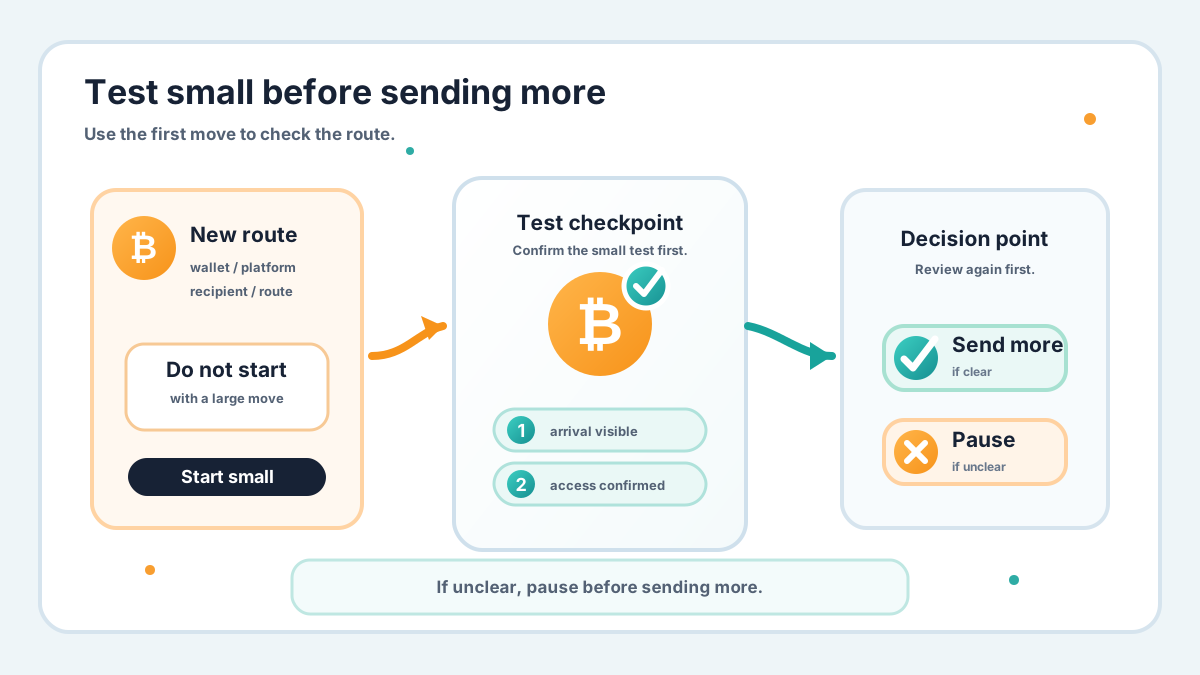
New path -> small test -> confirm arrival/access/records -> review again -> send more or pause.
Check | What to confirm | What not to assume |
|---|---|---|
Arrival | The test amount arrived where expected | That a pending or missing test is safe to ignore |
Access | You can actually access and control the receiving wallet or account | That seeing an address means you control the destination |
Records | You have the transaction record, time, amount, and destination note | That memory is enough for a larger move |
Amount displayed | The received amount makes sense after any visible costs | That the input amount and received amount are always identical |
Process clarity | You can explain each step you just completed | That confusion will disappear when the amount is larger |
Second review | The larger send is reviewed again from the current screen | That the successful test makes the next action automatic |
Confirm arrival, access, and records
The test should leave you with more than a feeling that it probably worked. You should be able to see where it arrived, access the receiving side, and keep a clear record of what you did.
If the receiving account shows a different status than you expected, if you cannot access the wallet, or if you cannot find a clear record, stop. The purpose of the test is to reveal exactly these problems while the amount is still small.
Re-check the final send before increasing the amount
When you move from the test to a larger send, start the review again. Check the current screen, the destination, the amount, the displayed costs, and any warnings.
This is where this article stays separate from fee and network articles. Fees, minimums, and network support still matter, but the main question here is simpler: did the small first send give you enough clarity to continue, or did it reveal a reason to pause?
If your first move was already large
If your first move was already large, the next step is not to keep clicking. Stop and collect information.
Save the transaction record, time, amount, destination details shown by the app, screenshots of the review or status screen if appropriate, and any support reference number. Do not post private account details, seed phrases, private keys, full screenshots, or personal information in public forums.
Then follow the official support path for the wallet, exchange, platform, or service involved. If the transaction is still pending, wait for the status to update according to the service's official guidance. If the transfer went to the correct destination but you do not recognize the display, check the receiving service's official documentation before taking another action.
The important rule is simple: do not try to fix uncertainty by sending more Bitcoin.
Stop, save records, and follow official support paths
When the amount is large, your job is to preserve evidence and avoid making the situation harder to understand. A second rushed transaction can create a second problem.
If you need help, use official support channels and qualified professional help when needed. Do not rely on strangers who promise recovery, private-message support, or special tools.
FAQ
What is a Bitcoin test transaction?
A Bitcoin test transaction is a small first send used to check a new destination, wallet, platform, recipient, or route before sending more. It helps you verify the path, but it does not guarantee that every later transaction will be safe.
Should I always send a test transaction first?
Not every tiny or familiar action needs the same process. A test transaction is most useful when the path is new, the amount is meaningful, the recipient is new, the wallet or platform is new to you, or you do not fully understand what the final screen is showing.
Does a successful test mean the larger send is safe?
No. A successful test is useful evidence, not a guarantee. You still need to review the larger send from the current screen before confirming.
What if the test transaction does not arrive?
Do not send more. Check the status, records, destination details, and official support documentation for the wallet or platform involved. If anything is unclear, pause before taking another action.
Is this the same as checking the network?
No. A test transaction does not replace network matching. If the wallet or platform asks you to choose a network or transfer path, read the current screen and official documentation before sending. The detailed network mistake belongs in the separate article on picking the wrong network.
Is this the same as checking fees and minimums?
No. Fees and minimums can affect whether a small test makes sense, but they are a separate check. This article is about not making your first move the largest amount. Fee and minimum details belong in the separate article on ignoring fees and minimums.
Can I recover Bitcoin if I already sent too much?
Sometimes support can clarify a status, but no article should promise recovery. Bitcoin transactions can be irreversible, and platform policies vary. Save records, avoid sending more, and use official support channels.
For the broader educational boundary around irreversible transactions, wallet mistakes, and platform changes, read the Risk Disclaimer.
Official References
Risk Disclaimer
This article is for beginner education only. It is not financial, investment, legal, tax, custody, or security advice. Bitcoin transactions can be irreversible, Bitcoin is volatile, and wallet mistakes can cause permanent loss. Wallet software, platform rules, withdrawal support, security features, and recovery processes can change. Check official wallet and platform documentation before acting, and use qualified professional help when needed.
Editorial Attribution
Written by Alex Chen. Reviewed by Jordan Blake for factual accuracy, clarity, and beginner safety.