
A paper wallet is a printed or written record that can hold Bitcoin wallet information, usually a public address and a private key. It sounds wonderfully simple: keep the key offline, keep the Bitcoin safe.
In the broader Bitcoin wallets and storage map, paper sits in a strange place. It can hold sensitive information, but paper is only a storage surface. It is not a safety plan.
That difference matters because a Bitcoin paper wallet can fail in very ordinary ways. The key can be created on an unsafe device, printed through a leaky printer, photographed by accident, damaged by water, thrown away during a desk cleanup, or misunderstood years later by the person who needs it most.
The old idea was appealing: take sensitive wallet information away from the internet and put it on paper. The modern problem is less romantic. Paper does not update, warn you, check your process, recover from a typo, or explain what to do when spending the funds exposes the private key.

Paper can hold sensitive wallet information, but paper alone is not a safety plan.
Paper wallet in one sentence
A paper wallet is an offline record of wallet access information, usually a Bitcoin address and private key, written or printed on paper.
For a beginner, the important word is not "paper." The important word is private key.
If someone can use the private key, they may be able to move the Bitcoin controlled by that key. If the private key is lost, damaged, copied, photographed, or entered into an unsafe place, the problem may be permanent.
That is why a paper wallet should not be treated like a cute backup note. It is more like a house key taped to a piece of cardboard. The cardboard is not dangerous. The key on it is.
This also means a paper wallet is different from a normal account password. You usually cannot click "forgot private key" and wait for a reset email. Bitcoin.org's general wallet-security guidance treats backups and private-key protection as basic responsibilities, not optional decoration.
How paper wallets used to work
Older Bitcoin paper wallet guides often followed a simple idea:
Generate a Bitcoin address and private key.
Print or write them down.
Receive Bitcoin to the address.
Keep the private key offline until spending later.
Sometimes the paper included QR codes so the address or private key could be scanned. That made the paper easier to use, but it also created a new safety problem. A private key QR code is still a private key. If it is readable, copied, scanned, photographed, or printed insecurely, it can expose the funds.
This is where the word "offline" can trick beginners.
Offline storage only helps if the whole process is controlled. A paper wallet generated on a compromised computer is not magically clean because it was printed afterward. A printer with memory, a photo backup, a cloud sync folder, or a random paper-wallet generator can all turn the "offline" idea into theater.
There is also a second issue: using the paper wallet later. Some wallets ask users to import or sweep a private key. Those words sound like small app buttons, but they can change the safety situation. Once a private key has been exposed to a connected device, the old paper should not be treated as a fresh long-term storage method.
A paper wallet may have been a historical form of cold storage, but it is not the same as a complete modern cold-storage setup.
Why paper wallets can fail beginners
Paper wallet risks usually come from four places: creation, printing, storage, and spending.
Risk area | What can go wrong | Beginner takeaway |
|---|---|---|
Creation | The key is generated on an unsafe device, unsafe website, or copied by malware | Do not trust random generator tools |
Printing | Printer memory, shared printers, photos, or cloud sync expose the key | Printing is not automatically private |
Storage | Paper fades, burns, gets wet, is thrown away, or is seen by someone else | Physical storage still needs a plan |
Spending | Importing or sweeping exposes the private key to a connected wallet | Do not experiment with meaningful funds |
The most dangerous part is that many failures look boring while they are happening.
Printing a page feels boring. Taking a quick photo feels boring. Putting paper in a drawer feels boring. Typing a private key into a website because a guide said so feels boring right up until it becomes a very expensive lesson.
This is why paper wallets should not be treated as a fun craft project for beginners. The problem is not that paper is bad. The problem is that the paper is carrying something with no patience for casual handling.
Paper wallet vs. seed phrase backup
A paper wallet and a seed phrase backup can both be written on paper, but they are not the same thing.
A paper wallet usually records access to one address or private key. A seed phrase is a set of recovery words used by many modern wallets to restore a wallet. Both must stay private. Both can cause permanent loss if mishandled. But they fit into different wallet systems.
Item | Paper wallet | Seed phrase backup | Beginner caution |
|---|---|---|---|
What it stores | Usually a private key and address | Recovery words for a wallet | Both must stay private |
How it is created | Often from a generator or older wallet flow | Usually during wallet setup | Use official wallet flows only |
Main risk | Key exposure during generation, printing, or spending | Recovery words copied, photographed, or stored online | Do not treat either as a normal note |
Spending behavior | Often requires import or sweep | Depends on wallet recovery and signing flow | Do not practice with large funds |
Beginner fit today | Usually not ideal for most beginners | Common in modern self-custody wallets | Still requires careful storage and restore knowledge |
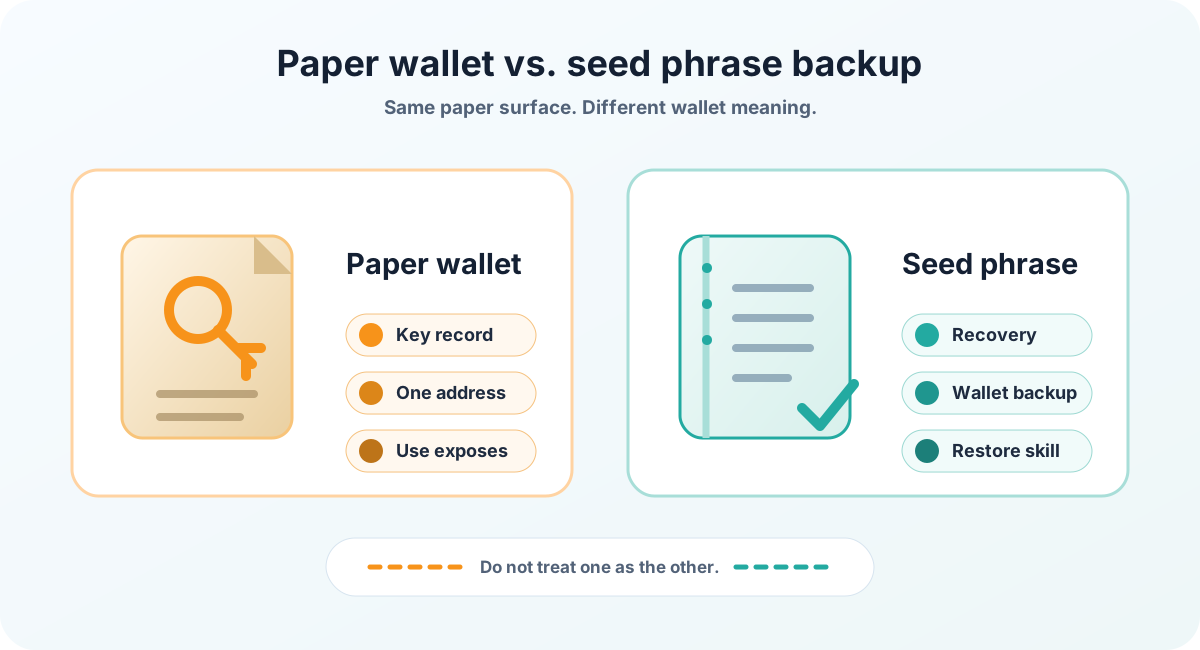
A paper wallet and a seed phrase backup are not the same thing.
The overlap is what makes this confusing. Both can be on paper. Both can be hidden in a drawer. Both can ruin your week if someone else sees them.
But the learning path is different. Private key and seed phrase basics explain why a single key record and a recovery phrase are not interchangeable. A cloud drive habit can also turn a private backup into an online exposure, even when the backup started on paper.
Safer storage habits to learn first
A beginner does not need a dramatic storage ritual. A beginner needs fewer fragile assumptions.
Start with these habits:
Use wallet software only from official sources.
Understand whether you control the keys or a platform controls custody.
Never upload, photograph, email, or cloud-save private keys or recovery words.
Avoid paper-wallet generator sites unless you truly understand the full offline process and its risks.
Keep backups private, durable, and understandable to the future version of you.
Learn the official recovery path before you need it, without turning this step into casual experimenting.
Use small amounts while learning.
Ask for qualified help before touching meaningful funds you do not understand.
This is where paper wallets reveal their awkward little truth. The simple-looking method often requires a careful process that is not simple at all.
For beginners, modern wallet education usually starts in a slower place: what a wallet controls, how private keys and seed phrases work, how cold storage differs from a connected wallet, and how to verify recovery before an emergency. That slower path matters because it leaves fewer surprises.
If you are still mapping the basics, the broader storage path is the safer place to organize the pieces. When comparing connected and offline options, a hot wallet and a cold wallet answer different problems.
What to do if you already have a paper wallet
If you already have a paper wallet, slow down before doing anything with it.
Do not type the private key into a random website. Do not scan a private key QR code into an app you have not verified. Do not take a photo for convenience. Do not ask a public chat, support impersonator, or AI tool to "check" the key.
The first safe question is not "How do I move it fast?"
The first safe question is "What exactly is on this paper, and what can be exposed if I handle it badly?"
If the value is tiny and you are learning, official wallet documentation may be enough to understand the difference between importing and sweeping. If the value matters, use qualified professional help or official wallet support paths before taking action. A mistake here can be hard to undo because Bitcoin transactions can be irreversible.
Also remember that a successful move is not the same as a complete storage plan. After funds leave an old paper wallet, the next wallet still needs backup habits and recovery confidence. That is where a real restore drill matters more than a reassuring piece of paper.
FAQ
Are paper wallets still safe?
A paper wallet can keep information offline, but that does not automatically make it safe. The full process matters: how the key was created, printed, stored, protected, and eventually spent. For most beginners, paper wallets are usually not the best first storage method.
Is a paper wallet the same as cold storage?
Not exactly. A paper wallet is sometimes described as a form of cold storage because the key may be kept offline. But modern cold storage usually means a broader setup for key generation, signing, backup, and recovery.
Is a paper wallet the same as a seed phrase?
No. A paper wallet usually contains a private key and address. A seed phrase is a recovery phrase used by many modern wallets. Both may be written on paper, but they are not the same backup system.
Is it safe to print a private key QR code?
Printing a private key QR code can expose the key through the computer, printer, photo backups, trash, shared spaces, or later scanning. Do not print, scan, upload, or share private key material unless you fully understand the process and risk.
Should beginners use a paper wallet generator?
Beginners should be very cautious with paper-wallet generators. A generator can create serious risk if it runs online, is fake, is compromised, or is used on an unsafe device. For most beginners, generator tools are better avoided than casually tested.
What should I read next?
For the larger storage map, review Bitcoin wallets and storage. For private key and recovery phrase basics, review that key material before creating backups. For offline storage concepts, compare paper wallets with cold storage before treating paper as a complete safety plan.
Official References
Risk Disclaimer
This article is for beginner education only. It is not financial, investment, legal, tax, custody, or security advice. Bitcoin transactions can be irreversible, Bitcoin is volatile, and wallet mistakes can cause permanent loss. Wallet software, platform rules, withdrawal support, security features, and recovery processes can change. Check official wallet and platform documentation before acting, and use qualified professional help when needed.
Editorial Attribution
Written by Alex Chen. Reviewed by Jordan Blake for factual accuracy, clarity, and beginner safety.