
Bitcoin risks are not one thing. The mistake is buying before you know which risk bucket you are stepping into: market volatility, irreversible transfers, platform limits, wallet control, scams, fees, records, and possible tax questions.
That does not mean "never buy Bitcoin." It means a beginner should pause long enough to understand the map before pressing the buy button. The buy screen is simple on purpose. The responsibilities behind it are not.

What "Understand the Risks" Means Before Buying Bitcoin
Understanding the risks does not mean you can predict Bitcoin's price. Nobody gets that button. It means you can explain what could go wrong before, during, and after a purchase.
For a beginner, the question is not only how to buy Bitcoin. It is whether you understand what the platform is doing, what Bitcoin is, who controls the keys, how a transfer works, what fees may apply, and what kinds of scams use urgency as bait.
Beginner answer: Bitcoin can be risky because its price can move sharply, transactions may be irreversible, platforms can restrict accounts or withdrawals, wallets require careful key management, and scammers often target people who are rushing. You do not need to become an expert before learning. You do need enough understanding to avoid obvious permanent mistakes.
The Bitcoin Risk Map Beginners Should Review First
Most people hear "Bitcoin risks" and think only about price. Price volatility is real, but it is just one room in the building. A beginner also has to think about platforms, payments, wallet control, scams, fees, and records.

Market Volatility Is One Risk, Not the Whole Map
Bitcoin's market price can move sharply. That is the most visible risk because charts are loud, colorful, and excellent at making a calm person suddenly check their phone like it contains weather for their soul.
Still, volatility is not the whole risk map. A beginner can avoid a bad entry price and still lose money through a scam, a platform problem, a mistaken transfer, a lost recovery phrase, or fees they did not understand.
If you are not sure what supports Bitcoin's value in the first place, review the value behind Bitcoin before treating a price chart as the whole story.
Platform Risk Can Affect Access Even Before Self-Custody
Many beginners start with an exchange, broker, or payment app because it feels familiar. That does not remove platform risk. A platform may have account reviews, payment holds, withdrawal limits, regional restrictions, outages, security incidents, or changing terms.
Before choosing where to buy, compare basic platform factors. A clean interface is useful. It is not the same as understanding account rules, support routes, fees, and withdrawal access.
Irreversible Transfers and Wallet Control Can Make Mistakes Permanent
Bitcoin transfers are not like card chargebacks. Once a transaction is broadcast and confirmed under the network's rules, a mistaken send may not be reversible through a bank, platform, or customer service desk.
That is why wallet basics matter. A receiving address is a destination you may share for receiving BTC. A private key or recovery phrase is different: it can control funds and should not be shared. If those concepts blur together, pause and read the wallet basics.
Scams, Fake Platforms, and Pressure Tactics
Bitcoin scams often do not begin with a technical exploit. They begin with a feeling: urgency, secrecy, romance, fear, status, or the promise that this one person has found the shortcut everyone else missed.
Be especially careful with guaranteed returns, crypto-only payment demands, fake support agents, recovery-service promises, private messages from strangers, investment groups that pressure you to act quickly, and anyone asking for a seed phrase or login code. A legitimate helper does not need the keys to your house to explain the front door.
Fees, Tax Records, and Documentation Can Still Matter
A Bitcoin purchase can involve platform fees, spreads, payment method fees, withdrawal fees, network fees, and exchange-rate differences. The number on the first screen may not be the full economic cost.
You may also need to keep records of buys, sells, transfers, cost basis, and platform statements. This article is not tax advice, but "I forgot" is not a record-keeping system. Save the information you may need later and check official rules for your own location.
Warning Signs That You Need a Deeper Guide Before Buying
A pause is not failure. It is how a beginner keeps a simple screen from turning into a permanent mistake.
Slow down if any of these are true: you cannot explain what BTC is, you do not know whether your platform allows withdrawals, you cannot identify a receiving address, you think every transfer can be reversed, someone is pushing you to buy quickly, or the purchase would use money you truly need for essentials.
You only know the ticker. If BTC is just a price moving on a screen, start with how the network works before buying.
You are chasing a move. FOMO can make safety feel slow. Treat that as a signal to pause, not a signal to skip checks.
You cannot explain custody. If platform balance, wallet, private key, and recovery phrase all sound the same, read wallet basics first.
You feel pressured. Urgency is a common scam ingredient. A real education path can survive a few more hours of checking.
Two nearby mistake patterns deserve their own deeper guides: using money you truly need, and chasing price moves while ignoring safety. In this article, they are warning signs rather than the main subject.
A Safer Risk Checklist Before Your First Bitcoin Purchase
A checklist cannot remove risk. It can make risk visible while you are still early enough to change course.
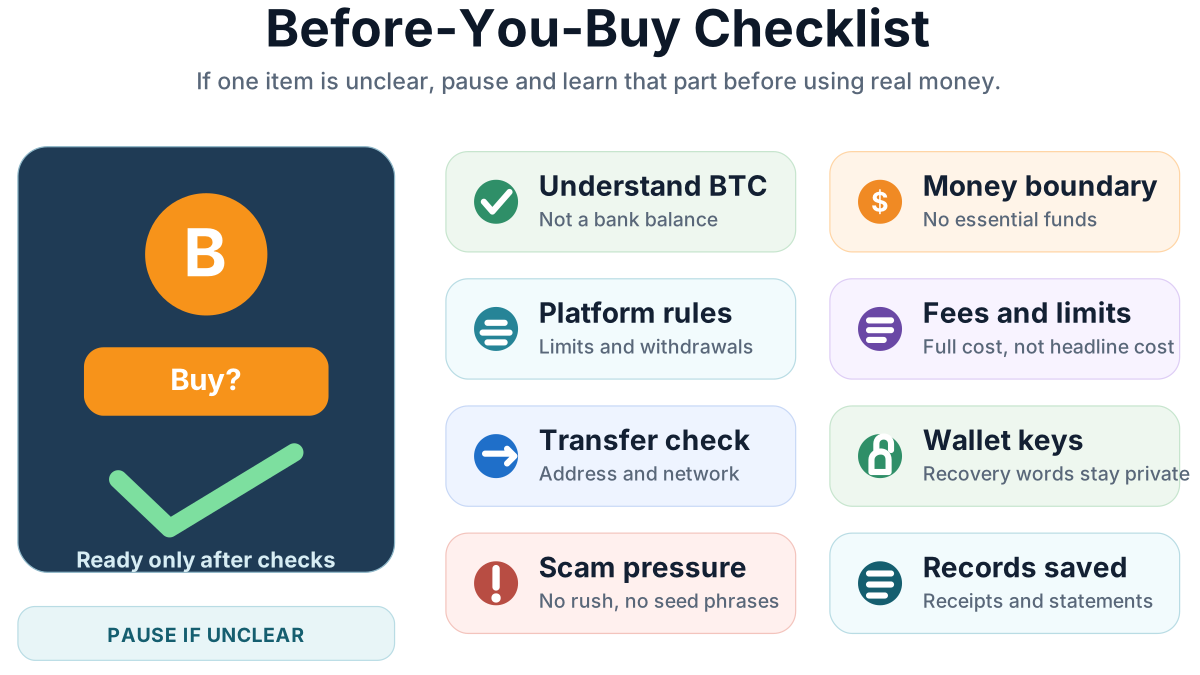
Risk point | Green light before buying |
|---|---|
Bitcoin basics | I can explain that BTC is not a bank balance and that network transactions work differently from card payments. |
Money boundary | I am not using money needed for bills, debt, rent, food, or emergencies. |
Platform rules | I checked fees, limits, identity requirements, support routes, and withdrawal access. |
Wallet control | I know the difference between a receiving address, a private key, and a recovery phrase. |
Transfer safety | I understand that a confirmed BTC send may not have a normal reversal path. |
Scam pressure | Nobody is rushing me, promising guaranteed returns, or asking for login codes or seed phrases. |
Records | I know what transaction records I may need to save later. |
Use the weakest line as your next study topic. If any row still feels unclear, pause before buying and learn that part first.
FAQ
Is Bitcoin risky for beginners?
Yes. Bitcoin can be risky for beginners because the price can be volatile, transactions can be irreversible, platforms can impose limits or reviews, wallet mistakes can be permanent, and scams often target people who are rushing. Education lowers some avoidable risk, but it does not remove market risk.
What are the main Bitcoin risks to understand before buying?
The main risks include market volatility, platform or custody risk, wallet and private-key mistakes, irreversible transfers, scams, fees, records, tax questions, and changing rules or availability in your region.
What should I understand before buying Bitcoin?
You should understand what BTC is, how the platform purchase works, what fees may apply, whether withdrawals are available, what a wallet address is, why seed phrases must stay private, and how to identify basic scam signals.
Should I buy Bitcoin if I do not understand the risks?
This article cannot make that decision for you. A safer educational approach is to pause until you can explain the major risk categories in plain language. If you cannot explain the downside, you are probably not ready to treat the action as routine.
Can a Bitcoin transaction be reversed?
A Bitcoin transaction generally cannot be reversed by a bank or card network after it is confirmed on the Bitcoin network. A recipient could choose to send funds back, but there is no ordinary chargeback button built into Bitcoin itself.
How do Bitcoin scams usually work?
Common patterns include guaranteed return claims, fake investment groups, fake support agents, romance or friendship pressure, recovery-service promises, crypto-only payment demands, phishing links, and requests for seed phrases, private keys, login codes, or remote screen access.
Risk Disclaimer
This article is for beginner education only. It is not financial, investment, tax, legal, or security advice. Bitcoin can be highly volatile, and you can lose money. Bitcoin transactions, platforms, wallets, ETFs, payment methods, fees, scams, records, and local rules can involve different risks. Always verify current official information and consider your own situation before making financial decisions.
Editorial Attribution
Written by Alex Chen. Reviewed by Jordan Blake for factual accuracy, clarity, and beginner safety.