
A custodial wallet puts a company or service in control of the private keys and account rules. A non-custodial wallet—also called a self-custody wallet—puts the keys or recovery authority in your hands.
That is the direct answer. The practical difference is where the responsibility lands when something goes wrong.
With custody, you depend on a provider to secure the keys, keep the service available, honor withdrawals, and restore account access when its rules allow. With self-custody, you depend on your own device security, backup, address checks, and ability to follow the wallet's recovery process.
Neither model removes risk. It moves risk to a different desk.

Custody changes who controls the keys, who manages recovery, and which failure you must prepare for.
This guide does not rank wallet brands or tell you to move all your Bitcoin. It gives you a way to inspect any wallet before trusting it.
The Difference in One Table
The word “wallet” can describe a platform account, a phone app, a hardware device, or a more complex shared-control setup. The label alone tells you very little.
Ask who controls the keys.
Question | Custodial wallet or account | Non-custodial / self-custody wallet |
|---|---|---|
Who controls the private keys? | A provider or custodian | You control the keys or recovery authority |
How is access usually recovered? | Provider account-recovery process | Wallet backup, recovery phrase, or another documented recovery method |
Can a provider restrict access? | It may pause, limit, or review account actions under its rules | No custodian approves a normal on-chain spend, but wallet software and services can still fail |
Main dependency | Provider security, solvency, policy, and withdrawal support | Your backup, device security, judgment, and recovery skill |
Common beginner mistake | Assuming an account balance means direct key control | Treating a recovery phrase like a normal password or cloud note |
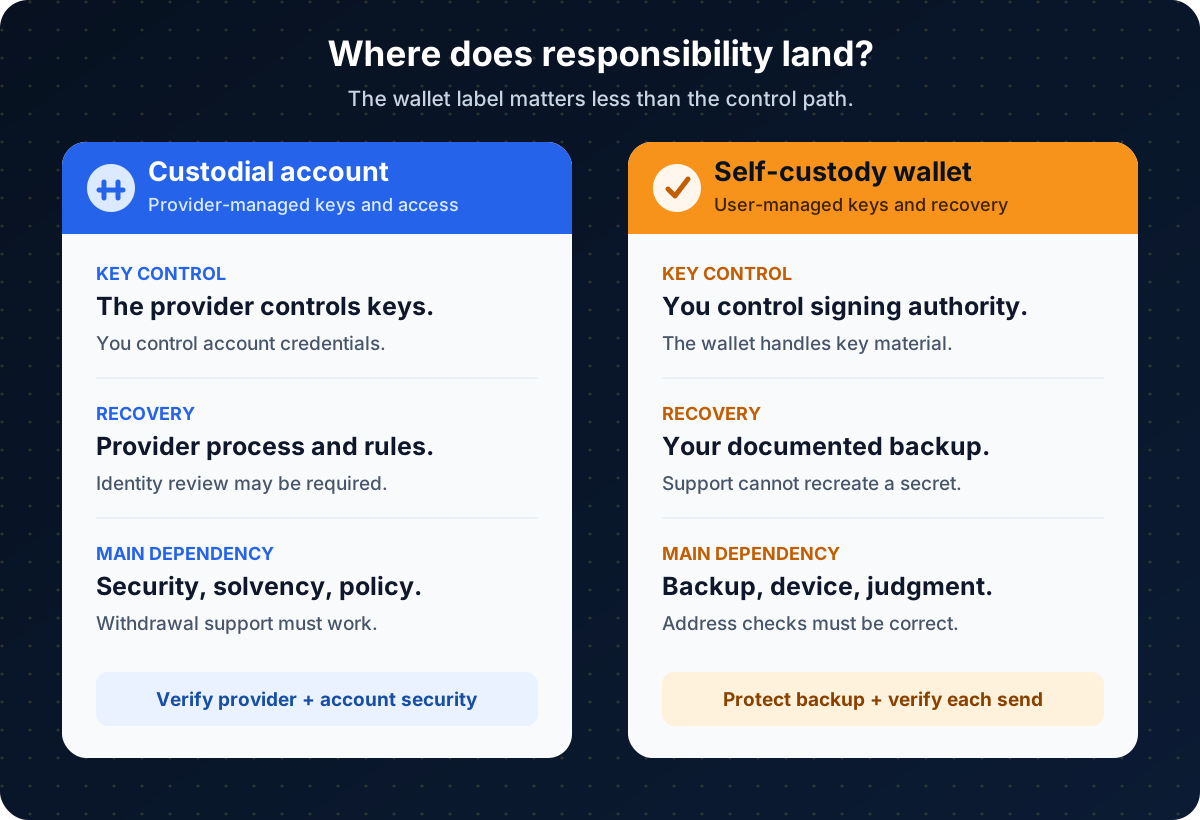
Custodial and non-custodial wallets place control and recovery responsibility in different hands.
This table is a beginner model, not a complete map of every wallet design. Multisignature, social recovery, multi-party computation, and assisted self-custody can divide responsibility among people, devices, or services. When a product does that, read its current recovery and signing documentation instead of guessing from the marketing label.
What Is a Custodial Wallet?
A custodial wallet is a wallet or account in which a third party controls the private keys on your behalf. Crypto exchanges and hosted wallet services commonly use this model.
The experience often looks familiar. You create an account, sign in with an email or phone number, set a password, add multi-factor authentication, and see a balance on a screen. If you forget the password, the provider may offer an account-recovery process.
That convenience is real. So is the dependency behind it.
The provider may control whether withdrawals are available, which networks it supports, how identity checks work, what limits apply, and what happens during a security review. If the service is hacked, becomes insolvent, shuts down, changes regions, or freezes an account, you may lose access even though the balance is still visible.
This does not mean every custodial service is unsafe. It means the safety question includes the custodian.
Before relying on one, a beginner should be able to answer:
Is this the official website or app?
Is the service allowed and available where I live?
Can I withdraw actual Bitcoin to an external Bitcoin address?
What security and account-recovery tools are available?
What current fees, limits, holds, and identity checks may apply?
What do the terms say about custody, failure, and account restrictions?
Platform features and rules change. Verify them on the provider's current official pages before depositing or moving funds.
What Is a Non-Custodial Wallet?
A non-custodial wallet lets you control the private keys or the authority needed to sign transactions. “Self-custody wallet” and “self-custodial wallet” usually describe the same basic model.
The useful word is control.
If the wallet is genuinely non-custodial, a company account is not supposed to be the final gatekeeper for a normal Bitcoin transaction. The wallet signs with key material you control, then sends the transaction to the Bitcoin network.
But control is not the same as automatic safety.
Your phone can be compromised. A fake wallet can steal recovery information. A bad backup can become unreadable. A phishing page can ask for a seed phrase. A wrong address can receive an irreversible transaction. Self-custody removes one category of counterparty risk and gives you a new category of operational responsibility.
Many self-custody wallets use a seed phrase or recovery phrase. Some use wallet files, multiple devices, shared keys, cloud-assisted recovery, or another design. Do not assume every non-custodial wallet has the same backup process. Follow the current official documentation for the exact wallet and version you use.
If a wallet gives you a seed phrase, keep it private and offline. Do not photograph it, upload it, email it, paste it into a website, send it to support, or give it to an AI tool. Anyone who gets the right recovery information may be able to restore the wallet and move the Bitcoin.
For the backup basics, read What Is a Seed Phrase? and Seed Phrase Storage for Beginners.
Who Holds the Keys—and How Can You Tell?
Beginners often try to answer the custody question by looking at the app icon. That does not work. One company can offer both a custodial account and a separate self-custody wallet.
Use four questions instead:
Who can authorize a spend? Does the provider approve withdrawals, or does your wallet sign directly with keys you control?
Who can recover access? Can the provider reset the account, or must you use a recovery phrase or wallet backup?
Who can restrict movement? Can an account review, region rule, or platform policy block a transfer?
How do you exit? Can you send Bitcoin to an external Bitcoin address, and what current network, fee, hold, or limit rules apply?
Call this the control map: authorize, recover, restrict, exit.
The map is more useful than a slogan because it works on unusual products too. If two devices and a recovery service share control, the four questions reveal that. If an app says “wallet” but only permits provider-approved withdrawals, the four questions reveal that too.
Recovery Responsibility Is the Real Tradeoff
Custody becomes most visible on the day access fails.
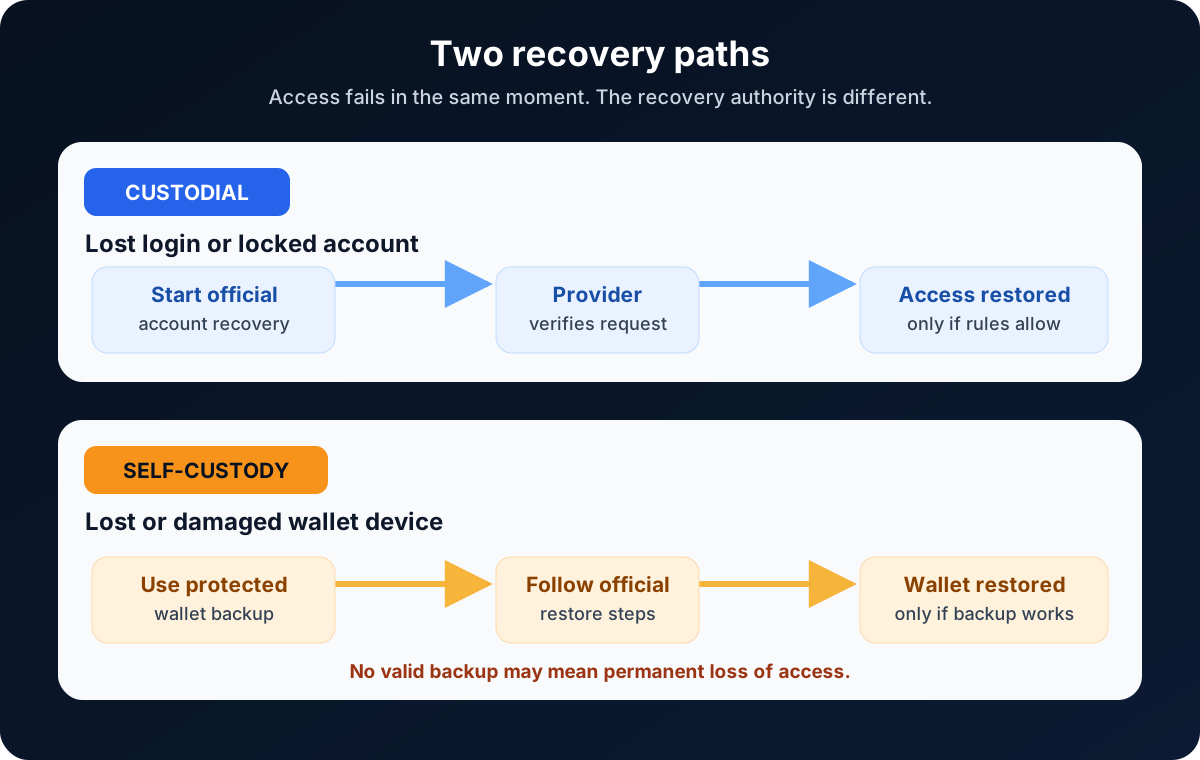
Account recovery depends on provider rules; self-custody recovery depends on the backup method you protected.
Custodial recovery
If you lose account access, the provider may let you reset a password, verify your identity, use backup codes, or contact official support. Recovery is not guaranteed. A provider can require documents, delay access during review, restrict an unsupported region, or deny a request that does not meet its security rules.
Never trust a support agent who contacts you first and asks for a seed phrase, private key, password, login code, or remote-control access. Use the support route inside the official app or a domain you verified yourself.
Non-custodial recovery
If you lose a self-custody device, recovery usually depends on the backup method created during setup. In many wallets that is a recovery phrase. In others it may be a wallet file, multiple keys, or an app-specific recovery design.
The wallet company may explain the process, but it normally cannot recreate a secret it never controlled. If both the wallet access and valid backup are lost, the Bitcoin may be permanently inaccessible.
That is why “support exists” and “support can recover the wallet” are not the same statement.
Convenience Tradeoffs Without a Fake Winner
A custodial account can make buying, selling, account recovery, and record access feel more familiar. It may also connect directly to supported bank or payment rails. In exchange, you accept provider risk, account rules, identity requirements, withdrawal limits, and possible access restrictions.
A self-custody crypto wallet can give you more direct control over sending and receiving Bitcoin. It can reduce reliance on a custodian. In exchange, you accept backup responsibility, device risk, phishing risk, software risk, and the possibility of permanent mistakes.
The comparison is not “easy and bad” versus “hard and good.”
It is two different failure models.
The better question is not which wallet type sounds more independent. Ask which responsibilities you actually understand today, and which losses you have prepared to prevent.
Where Each Model May Appear
Custodial and non-custodial models can appear in several places:
Exchange account: generally custodial, because the exchange controls the keys and withdrawal process. Verify the specific product.
Brokerage or payment app balance: often custodial or account-based. Check whether external Bitcoin withdrawals are supported.
Mobile or desktop wallet that creates a recovery phrase: often non-custodial, but verify who can sign and how recovery works.
Hardware wallet: commonly used for self-custody, although optional recovery services or shared-control designs can change the trust model.
Lightning wallet: can be custodial or non-custodial. Lightning recovery can have extra technical details, so read Bitcoin Lightning Wallets before assuming it works like a basic on-chain wallet.
An exchange wallet is usually custodial, but the company name is not enough evidence. Some companies offer separate products with different custody models. Read the product's own custody and recovery documentation.
Common Beginner Mistakes
Mistake 1: Assuming every wallet means self-custody
A balance inside an account may represent a claim managed by the provider, not Bitcoin controlled by keys you hold.
Mistake 2: Assuming non-custodial means risk-free
Self-custody removes the provider from key control. It does not remove malware, phishing, bad backups, wrong addresses, damaged devices, software bugs, or human error.
Mistake 3: Treating a seed phrase like a password
A password may be reset. A seed phrase may restore the wallet somewhere else. Store it offline and never share it.
Mistake 4: Moving everything before testing the process
A new wallet, unfamiliar address, and large first transfer create several unknowns at once. When practical, learn the receive flow and use a small test transfer before moving a meaningful amount. Check fees and minimums first because platform rules can make tiny transfers impractical.
Mistake 5: Believing support can reverse a Bitcoin transaction
Bitcoin transactions may be irreversible. A custodian might stop a withdrawal before it is broadcast under some circumstances, but once a valid transaction is sent and confirmed, normal bank-style chargebacks do not apply.
Mistake 6: Choosing from a slogan
“Not your keys, not your coins” highlights counterparty risk. It does not teach backup design, phishing resistance, inheritance planning, or address checking. A useful warning is not a complete operating manual.
Can You Use Both?
Yes. A person can use a custodial account for one purpose and a non-custodial wallet for another. Using both does not erase either model's risks; it means you must understand two recovery paths and the transfer between them.
For example, buying through a platform and withdrawing to self-custody introduces a Bitcoin transfer. That transfer has an address, network, amount, fee, and confirmation state. Sending to the wrong destination may cause permanent loss. The platform may also apply current identity checks, holds, limits, or withdrawal rules.
Do not split funds across tools just to make the setup look sophisticated. Every extra account, app, device, and backup is another object you must secure and understand.
Checklist Before Moving Bitcoin
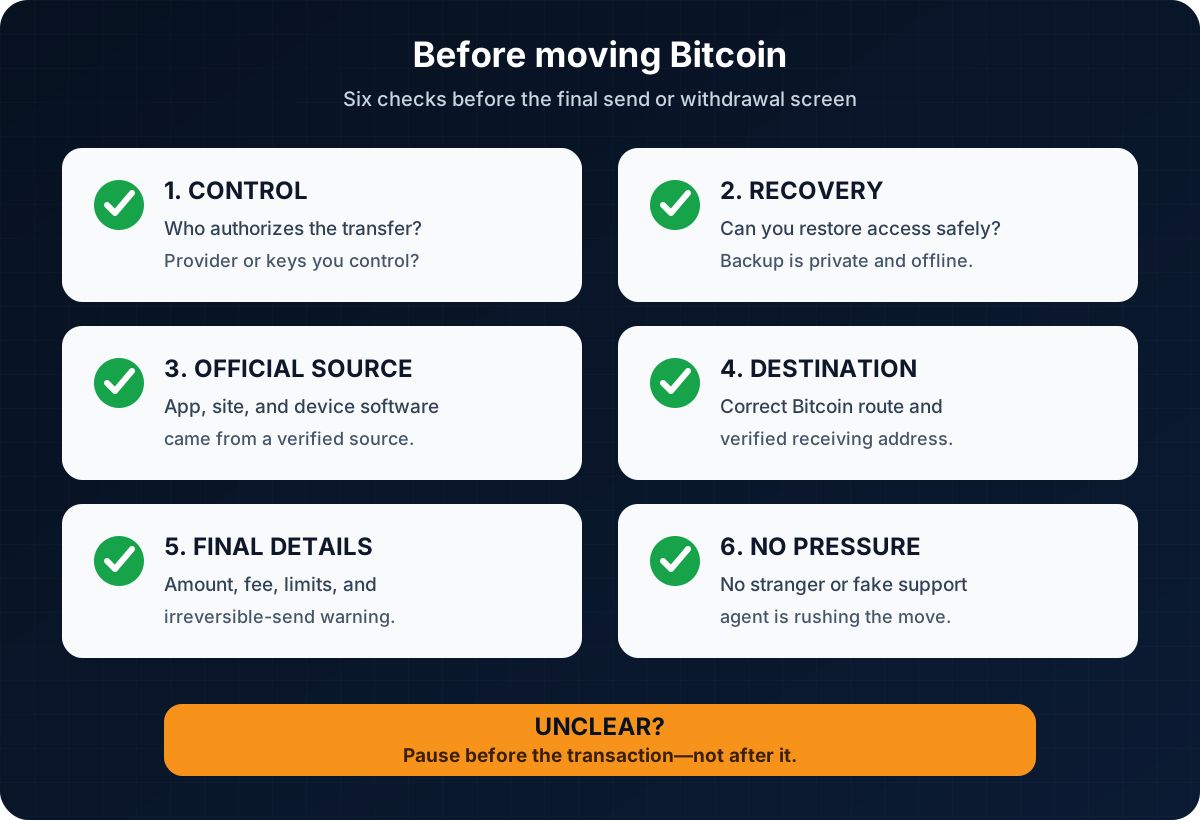
Before moving Bitcoin, verify control, recovery, destination, rules, and the final transaction details.
Pause before moving funds and confirm:
I know whether the current balance is custodial or self-custodied.
I know who controls the keys and who can authorize a transfer.
I understand the destination wallet's official recovery method.
Any seed phrase or private key is offline, private, and never shared.
I am using the official app, device software, and website.
The destination supports Bitcoin on the route I selected.
I checked the full receiving address, amount, fee, and current platform limits.
I understand that a Bitcoin transaction may be irreversible.
I am not acting because a stranger or fake support agent is rushing me.
When practical, I considered a small test transfer and know how to verify it.
I saved any records I may need and checked relevant platform and local tax rules.
If one line is unclear, stop there. The useful skill is not moving Bitcoin quickly. It is knowing which desk owns each failure before you press send.
FAQ
Is an exchange wallet custodial?
Usually, yes. In a normal exchange account, the exchange controls the private keys and approves withdrawals. However, one company may offer a separate self-custody product, so verify the exact product's key control, recovery process, and withdrawal documentation.
Can a non-custodial wallet recover my seed phrase?
Normally, no. A genuine non-custodial wallet provider may explain how to restore from an existing backup, but it usually cannot recreate a seed phrase it never held. If the phrase and wallet access are both lost, recovery may be impossible. Never send the phrase to support.
Which wallet type has more responsibility?
Self-custody puts more direct key, backup, and transaction responsibility on the user. Custody moves much of the key management to a provider, but the user still must protect the account, verify the service, follow platform rules, and understand counterparty and withdrawal risk.
Can I use both custodial and non-custodial wallets?
Yes. The two models can serve different purposes. Using both means understanding both recovery systems and every transfer between them. It does not make either setup automatically safer.
Is a non-custodial wallet the same as a cold wallet?
No. Custody and connectivity describe different things. A non-custodial wallet can be hot or cold, and third-party custodians may use hot and cold storage behind the scenes. The custody question is who controls the keys; the hot-versus-cold question is how exposed the signing environment is to online systems.
Risk Disclaimer
This article is for beginner education only. It is not financial, investment, legal, tax, custody, wallet-recovery, or cybersecurity advice. Bitcoin is volatile, Bitcoin transactions may be irreversible, and wallet mistakes can cause permanent loss. Never share a private key, seed phrase, recovery phrase, password, PIN, login code, or wallet backup with anyone. Keep recovery information private and offline. Wallet software, recovery designs, fees, limits, identity checks, withdrawal support, regional availability, and platform policies can change. Verify current official wallet and platform documentation, and check relevant local tax and legal requirements before acting.
Editorial Attribution
Written by Alex Chen. Reviewed by Jordan Blake for factual accuracy, clarity, and beginner safety.