
A Bitcoin wallet can show you several things that all look important: a wallet address, a QR code, a public key, a private key, a seed phrase, a recovery phrase, sometimes a backup file, sometimes a scary warning screen.
The beginner problem is not that these words are hard.
The beginner problem is that they live too close together.
One thing is meant to be shared so someone can send you BTC. Another thing can help verify a transaction. Another thing can authorize spending. Another thing can rebuild access to the wallet. If you paste the wrong one into the wrong place, the mistake may be permanent.
Here is the short version:
A wallet address is like a receiving destination. You can share it carefully.
A public key helps with verification and can be public in some contexts, but beginners usually do not need to share it manually.
A bitcoin private key is secret signing power. Never share it.
A seed phrase is a recovery backup that can recreate wallet keys. Never share it.

Some wallet information can be shared carefully. Private keys and seed phrases must stay private.
This guide will not show a real private key, real seed phrase, or real Bitcoin address. Any example is deliberately fake and must not be used in a real wallet.
One-Sentence Comparison Table
Before the details, put the four terms into one mental drawer:
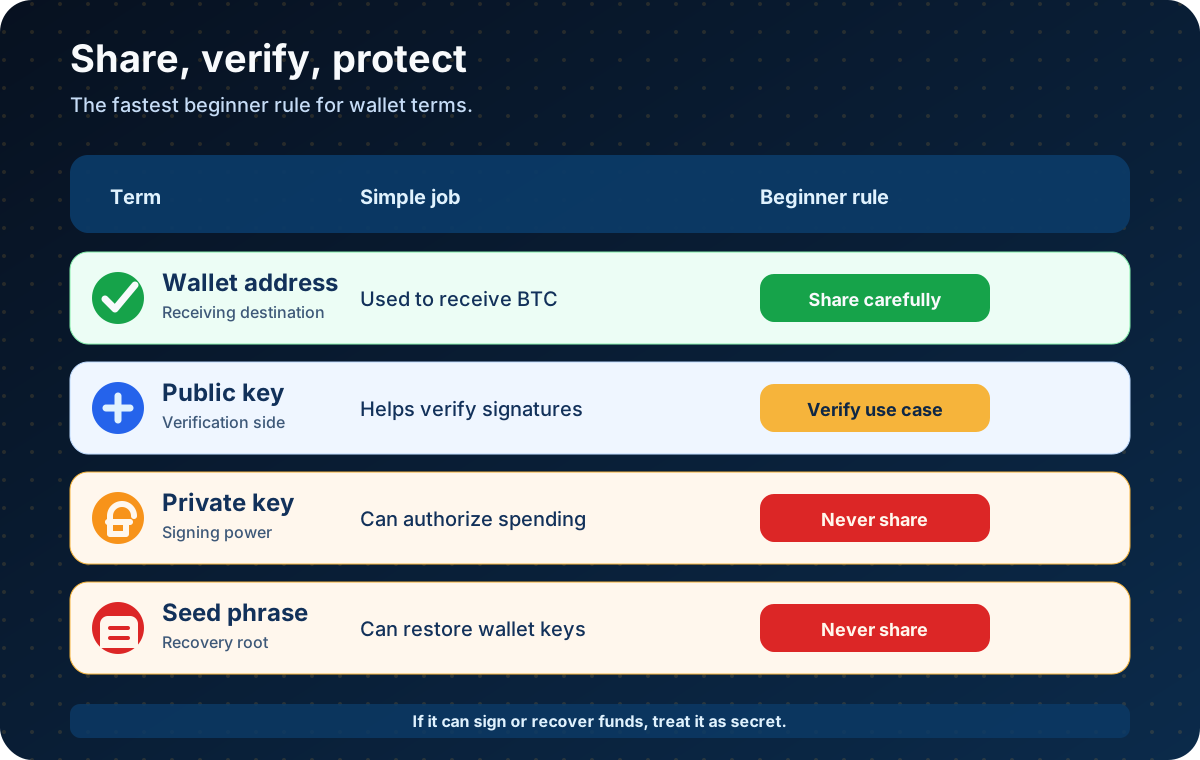
The useful beginner split is share, verify, protect.
The table above is the practical rule. A Bitcoin address is the normal thing to copy when receiving funds. A private key or seed phrase is not.
Term | Simple job | Beginner sharing rule |
|---|---|---|
Wallet address | Receives Bitcoin | Share carefully when you want to receive BTC |
Public key | Helps verify signatures | Usually not something beginners need to share manually |
Private key | Can authorize spending | Never share, paste, screenshot, or upload |
Seed phrase | Can restore wallet keys | Never share, paste, screenshot, or upload |
That is the whole article in miniature.
Now we can slow down.
What Is a Bitcoin Private Key?
A bitcoin private key is secret data that can authorize spending from Bitcoin controlled by that key or wallet path. In very simple language, it is the part that lets a wallet sign a transaction.
The word "private" is doing real work here.
A private key is not a username. It is not a wallet address. It is not a support code. It is not something a real helper needs to "check" for you. If someone gets the right private key, they may be able to move funds tied to it. If a transaction is signed and confirmed on the Bitcoin network, reversing it may not be possible.
Many modern wallets hide individual private keys from normal users. That is usually a good thing. Instead of asking you to manage a separate wallet private key for every address, the wallet may give you a seed phrase or recovery phrase during setup. The phrase can then restore the wallet's keys.
So if you are using a modern self-custody wallet and cannot find a button called "show private key," that does not automatically mean something is wrong. It may mean the wallet is trying to keep you away from the most dangerous object in the room.
Private Key Wallet: What the Wallet Actually Holds
People often say "my Bitcoin is in my wallet." That is convenient language, but it is not quite how Bitcoin works.
Bitcoin is recorded on the Bitcoin network. A wallet helps manage keys, addresses, and transactions. A private key wallet, in the beginner sense, is a wallet that controls private key material or a recovery method that can recreate it.
Think of the wallet as a tool with three jobs:
Create or manage addresses for receiving.
Keep signing material private.
Sign transactions when you decide to send.
The private key is not valuable because it looks impressive. It may look like a long ugly string, or it may be hidden behind a recovery phrase. It is valuable because it can prove control.
That is why "private key finder" claims are dangerous. A site, app, video, or person promising to find private keys, recover random lost Bitcoin, scan the internet for funded keys, or generate lucky keys is not giving beginners a real path to Bitcoin. It is often phishing, malware, nonsense, or bait for people who are already anxious.
Do not paste wallet files, private keys, seed phrases, screenshots, or QR codes into private key finder tools.
What Is a Public Key?
A public key is mathematically related to a private key. In Bitcoin, the private key can create signatures, and the public key can help verify that a signature is valid.
That is the difference between public and private key in plain language:
The private key signs.
The public key helps verify.
The public key is not the same thing as a wallet address. A wallet address is usually derived from public-key or script information through additional steps. Beginners do not need to memorize that pipeline, but they should not collapse every long string into one category.
Here is a simplified map:
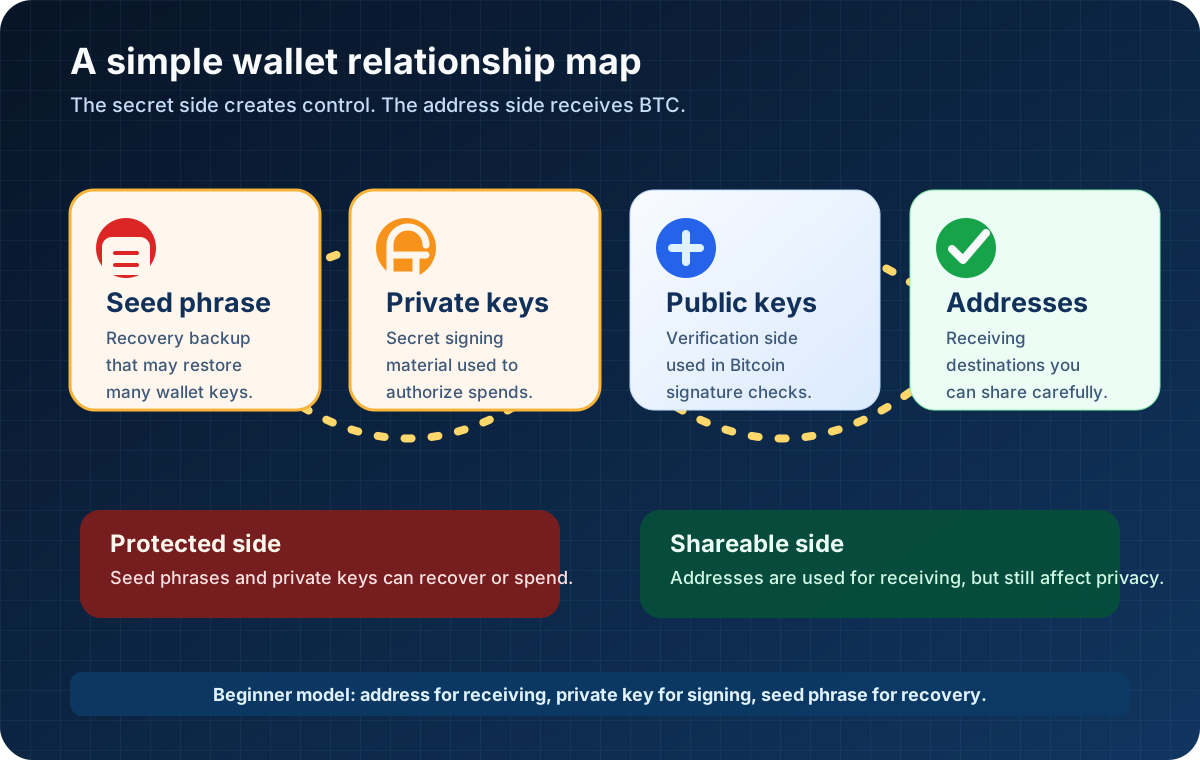
A seed phrase may restore many keys; addresses are the receiving destinations people normally use.
The diagram is a beginner model, not a complete engineering map for every wallet. Modern wallets can use different address types, scripts, descriptors, derivation paths, and recovery designs. The practical takeaway is still stable: do not share the secret side.
What Is a Wallet Address?
A Bitcoin wallet address is the destination you share when you want to receive BTC. It can appear as a long string, a QR code, or both.
An intentionally fake example might look like this:
``text bc1qexample-address-only-do-not-use ``
That is not a real address. It only shows the shape of the idea.
If someone is sending Bitcoin to you, the wallet address is the normal item to give them. If you are withdrawing from a platform, the address is what you paste into the withdrawal form after checking the asset and network.
This does not mean addresses are meaningless. Bitcoin transactions are visible on a public blockchain. Sharing an address can reveal activity tied to that address, especially if you reuse it or connect it to your identity.
So the rule is:
Share a receiving address when needed, but do not share it casually everywhere forever.
If you need the receiving-address basics first, read Bitcoin Wallet Address Explained.
What Is a Seed Phrase?
A seed phrase is a set of words that can restore access to a wallet in many self-custody setups. It may also be called a recovery phrase or mnemonic phrase.
This is where beginners get into trouble. A seed phrase looks friendly. Words feel less technical than a private key. You can write them on paper. You can read them out loud. You can photograph them.
That friendliness is the trap.
In many wallets, the seed phrase can recreate the wallet's private keys and addresses. If someone gets the seed phrase, they may not need your phone, hardware wallet, app password, or face ID. They may be able to restore the wallet somewhere else.
If you lose the seed phrase and lose access to the wallet, there may be no central company that can rebuild it for you.
For a full backup guide, read What Is a Seed Phrase?. For storage habits, use Seed Phrase Storage for Beginners.
Is My Seed Phrase My Private Key?
Not exactly.
A seed phrase is usually not one single private key. It is more like a recovery root that can generate or restore many keys in a wallet. A private key is the secret signing material used for specific wallet paths or funds.
The difference matters technically.
For safety, though, the beginner rule is the same:
Treat both as secret.
Do not share your seed phrase. Do not share a wallet private key. Do not upload either one to a website. Do not type either one into a random recovery form. Do not send either one to support. Do not ask a stranger, influencer, "wallet recovery expert," or AI tool to check either one.
If a screen asks for one of them, pause and verify whether you are using the official wallet recovery flow you intended to use.
What Can Be Shared?
The shareable item is usually your receiving address.
You can share a Bitcoin address when:
You want someone to send BTC to you.
You are withdrawing BTC from a platform to your wallet.
You are creating an invoice or payment request.
You are using a wallet's receive screen and have verified the address.
Even then, copy carefully. Do not type addresses from memory. If a QR code is involved, make sure it represents the receiving address, not a private key or seed phrase.
Some advanced wallet tools may expose public keys, extended public keys, descriptors, or watch-only wallet information. Beginners should be cautious here. "Public" does not always mean "share with everyone forever." Some public wallet information can affect privacy by revealing address patterns or wallet activity.
If you do not know why a tool is asking for a public key or extended public key, stop and read the wallet's official documentation first.
What Must Never Be Shared?
Never share:
A bitcoin private key.
A wallet private key QR code.
A seed phrase or recovery phrase.
A seed phrase photo.
A wallet backup file you do not understand.
A hardware wallet PIN.
A wallet password.
Login codes, two-factor codes, or account recovery codes.
This includes sharing with people who claim to be support.
Real support staff should not need your private key or seed phrase. A website that says "enter your seed phrase to verify your wallet" is not acting like a normal help page. It is reaching for the crown jewels before it even asks what problem you have.
If your concern involves QR codes, read Private Key QR Code Safety. A QR code is not automatically safe just because it looks tidy.
Beginner Examples: Which Item Do You Use?
Here are common situations.
You want someone to send you Bitcoin
Use a receiving address from your wallet's Receive screen. Check that the wallet is set to Bitcoin or BTC. Share the address or address QR code carefully.
Do not share your private key or seed phrase.
You want to send Bitcoin
You usually need the recipient's Bitcoin address. Your wallet uses its private key material internally to sign the transaction. You do not need to reveal the private key to the recipient.
Before sending, check the address, amount, fee, and network details. Bitcoin transactions can be irreversible. If you need the sending flow, read How to Send Bitcoin.
You are backing up a self-custody wallet
You usually back up the seed phrase or the wallet's official recovery method. Keep it offline, private, readable, and protected from damage.
Do not store it in screenshots, cloud notes, email, chat apps, or browser forms.
You found an old paper wallet private key
Be careful. A paper wallet private key may control funds if it was created correctly and still has unspent Bitcoin tied to it. It may also be empty, already swept, damaged, exposed, or misunderstood.
Do not type the private key into random online tools. Do not paste it into a "balance checker" that asks for the private key. A public address can be checked without revealing a private key; a private key should only be handled inside a wallet process you understand and trust.
If meaningful funds may be involved, slow down and research the current safe recovery method before taking action.
Common Mistakes to Avoid
The mistakes usually come from treating all wallet strings as the same kind of thing.
Avoid these:
A withdrawal form should ask for a receiving address, not your wallet recovery words.
Pasting a seed phrase where an address belongs.
If they have the key, they may have control.
Sending a private key to someone who says they can recover funds.
It may encode an address, a private key, a payment request, or something else.
Scanning a QR code without knowing what it contains.
They are related concepts, but not the same. The public key helps with verification; the address is the receiving destination.
Calling an address a public key.
The easiest backup is often the easiest leak.
Keeping a seed phrase in cloud storage.
Private keys are not found by luck in a useful real-world way. These claims often target confused beginners.
Believing a private key finder can discover lost Bitcoin for free.
A password may unlock a local app. A seed phrase may restore the wallet elsewhere.
Assuming a wallet password protects everything.
The fix is not to become a cryptographer in one afternoon.
The fix is to sort the objects before you touch them.
A Simple Rule Before You Copy or Scan Anything
Before copying, pasting, scanning, exporting, importing, or uploading anything from a wallet, ask one question:
What job is this item doing?
If it is a receiving destination, it may be okay to share carefully.
If it is signing power or recovery power, keep it private.
That one pause can prevent many expensive beginner mistakes. The wallet interface may change. The button labels may change. The app design may change. But this map stays useful:
address for receiving, public key for verification, private key for signing, seed phrase for recovery.
Do not mix up the map.
FAQ
Can I share my Bitcoin address?
Yes, you can share a Bitcoin receiving address when you want someone or a platform to send BTC to you. Share it carefully, check that it came from your wallet's receive screen, and remember that blockchain activity tied to an address may be publicly visible.
Is my seed phrase my private key?
Not exactly. A seed phrase is usually a recovery backup that can recreate many wallet keys. A private key is secret signing material for specific wallet control. For beginner safety, treat both as highly sensitive and never share either one.
What is a public key?
A public key is derived from a private key and helps verify signatures. It is related to Bitcoin addresses, but it is not the same as a wallet address. Beginners usually do not need to manually share public keys unless a trusted wallet guide explains why.
What happens if someone sees my private key?
If someone sees the right private key, they may be able to spend the Bitcoin controlled by it. If funds are moved and the transaction confirms, reversal may not be possible. Treat an exposed private key as a serious emergency.
Is a paper wallet private key safe to type into a website?
No. Do not type a paper wallet private key into random websites, balance checkers, screenshots tools, or recovery services. If you need to move funds from a paper wallet, use a wallet process and official documentation you understand before exposing the key.
Can a wallet address reveal my private key?
A normal Bitcoin address does not reveal the private key. However, address activity may be visible on the public blockchain, and sharing or reusing addresses can affect privacy. Keep the private key and seed phrase secret even when the address is shared.
Risk Disclaimer
This article is for beginner education only. It is not financial, investment, legal, tax, custody, wallet-recovery, or cybersecurity advice. Bitcoin transactions can be irreversible, Bitcoin is volatile, and wallet mistakes can cause permanent loss. Never share your private key, seed phrase, recovery phrase, wallet password, PIN, login codes, or backup files with anyone. Wallet interfaces, recovery flows, address formats, fees, limits, and platform policies can change. Check the wallet's current official documentation before acting.
Editorial Attribution
Written by Alex Chen. Reviewed by Jordan Blake for factual accuracy, clarity, and beginner safety.