
If you see sats, 50 sats, or satoshi in a Bitcoin wallet, the satoshi meaning is simple: a satoshi is the smallest commonly used unit of Bitcoin. Sats are not a separate coin, and they are not the same thing as Satoshi Nakamoto the person.
Bitcoin can be divided into very small units, so beginners do not need to think only in whole BTC. Wallet balances, small payments, and some fee displays may use sats because they are easier to read than long Bitcoin decimals.
This article is not a price converter and not a page about SATS tokens. It explains Bitcoin units so you can read small amounts without mixing up the words.

Sats are small units of Bitcoin.
Satoshis in one sentence
A satoshi is the smallest commonly used unit of Bitcoin. The short form is sat, and the plural is often written as sats.
The easiest way to think about it is this: BTC is the larger unit, and sats are tiny pieces of BTC. Just as dollars can be divided into cents, Bitcoin can be shown in smaller units. The comparison is not perfect, but it helps beginners understand why a wallet might show a small number of sats instead of a long BTC decimal.
When people say "50 sats," they usually mean 50 satoshis as a Bitcoin amount. They are talking about a unit, not a recommendation, a price prediction, or a separate investment idea.
How many satoshis are in one Bitcoin?
One Bitcoin equals 100,000,000 satoshis. Bitcoin.org's vocabulary defines a satoshi as the smallest unit of bitcoin recorded on the blockchain.
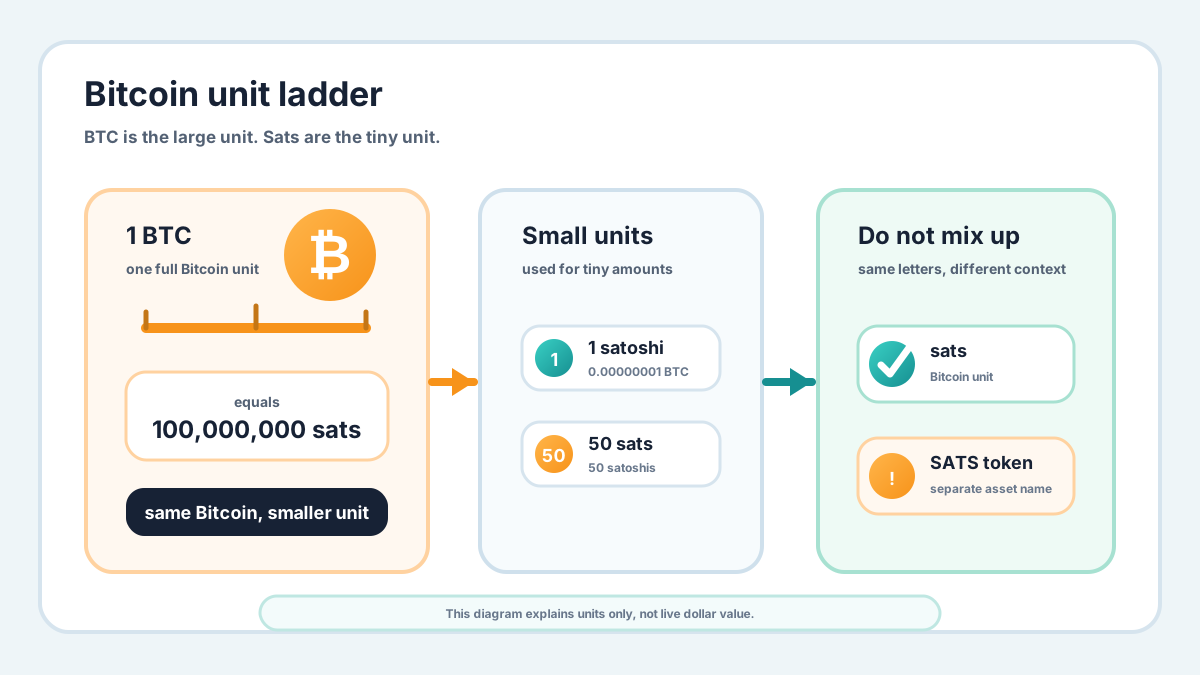
1 BTC equals 100,000,000 satoshis.
That means:
Unit | Meaning | Beginner note |
|---|---|---|
1 BTC | 100,000,000 satoshis | Full Bitcoin unit |
1 satoshi | 0.00000001 BTC | Smallest commonly used Bitcoin unit |
50 sats | 50 satoshis | Tiny Bitcoin amount, not a price claim |
SATS token | Separate asset name in some contexts | Not the same as satoshis as a unit |
The table is about Bitcoin units, not market value. The dollar value of 50 sats changes with the Bitcoin price.
Why 50 sats can look confusing
50 sats can confuse beginners because search results may also show pages about SATS tokens or Ordinals-related assets. In a Bitcoin wallet or beginner education context, however, 50 sats usually means 50 satoshis, a tiny unit of Bitcoin.
Why beginners see sats in wallets and fees
Beginners see sats because whole Bitcoin amounts can be hard to read when the amount is small. A wallet might show a tiny balance, a small payment, or a fee in sats so the number feels less abstract.
For example, reading 0.00000050 BTC is harder than reading 50 sats. Both can describe the same Bitcoin amount, but sats are easier for many people to scan.
Sats in small balances
Small Bitcoin balances often look strange when written as BTC decimals. A beginner may see many zeros and wonder whether the amount is real, missing, or too small to matter.
Sats make the same amount easier to discuss. This does not mean small amounts have no risk. It only means the unit can be easier to read.
Sats in fees and Lightning payments
Sats can also appear in fee displays, small Bitcoin payments, or Lightning-related contexts. The important idea is not to learn a new coin. The important idea is to recognize that sats are a way to express Bitcoin in smaller units.
If you are sending Bitcoin or reading a wallet screen, sats help you compare small amounts more clearly. The actual sending steps, fees, and timing belong in separate SatoABC sending and wallet guides.
Satoshi the unit vs. Satoshi Nakamoto
The unit name satoshi comes from Satoshi Nakamoto, the name used by Bitcoin's creator. But the unit and the person are not the same concept.
When a wallet says sats, it is talking about Bitcoin units. When an article asks who Satoshi Nakamoto is, it is talking about the creator identity and Bitcoin history.
For beginners, the clean rule is: lowercase satoshi or sats usually refers to the unit; Satoshi Nakamoto refers to the person or pseudonym behind Bitcoin's creation.
SATS tokens and other look-alike terms
Sats as a Bitcoin unit and SATS as a token name are not the same thing. In a wallet balance, fee, or small Bitcoin payment, sats usually means satoshis; on a price page, trading pair, or token listing, SATS may refer to a separate asset name.
FAQ
Is a satoshi the same as Bitcoin?
A satoshi is part of Bitcoin, not a separate Bitcoin. One Bitcoin is made up of 100,000,000 satoshis.
How much is 50 sats?
50 sats means 50 satoshis, or 0.00000050 BTC. Its dollar value changes with the Bitcoin price, so this article does not give a fixed dollar conversion.
Why do people use sats instead of BTC?
People use sats because small Bitcoin amounts are easier to read in sats than in long BTC decimals.
Is sats the same as a SATS token?
No. In a Bitcoin unit context, sats means satoshis. A token named SATS is a separate topic and should not be confused with satoshis as a unit of Bitcoin.
Do I need to understand sats before buying Bitcoin?
You do not need advanced math, but you should understand that Bitcoin can be divided into very small units. That helps you read balances, small purchases, wallet screens, and fees more calmly before buying Bitcoin.
Official References
Risk Disclaimer
This article is for beginner education only. It is not financial, investment, legal, tax, custody, or security advice. Bitcoin transactions can be irreversible, Bitcoin is volatile, and wallet mistakes can cause permanent loss. Wallet software, platform rules, withdrawal support, security features, and recovery processes can change. Check official wallet and platform documentation before acting, and use qualified professional help when needed.
Editorial Attribution
Written by Alex Chen. Reviewed by Jordan Blake for factual accuracy, clarity, and beginner safety.