
A Bitcoin multisig wallet requires more than one approved key to authorize a transaction. In a common 2-of-3 setup, the wallet is built around three keys and any two of them can sign a spend.
That can reduce one specific danger: one lost or stolen key does not automatically decide the wallet's fate.
It also creates a new kind of homework. You now have multiple keys, multiple backups, a shared wallet configuration, and a signing process that must still make sense on the worst day—not just on setup day.

Multisig replaces one approval point with a rule shared across multiple keys.
The useful beginner model is not "more keys equals more safety." It is this:
A multisig wallet changes the failure map. It can remove some single points of failure, while adding coordination and recovery failure points of its own.
What “2-of-3” Actually Means
The phrase uses a simple format: m-of-n.
n is the total number of public keys in the wallet policy.
m is the minimum number of valid signatures needed to spend.
So a 2-of-3 wallet has three participating keys and requires signatures from any two. Key A plus Key B can authorize a transaction. Key A plus Key C can too. So can Key B plus Key C.
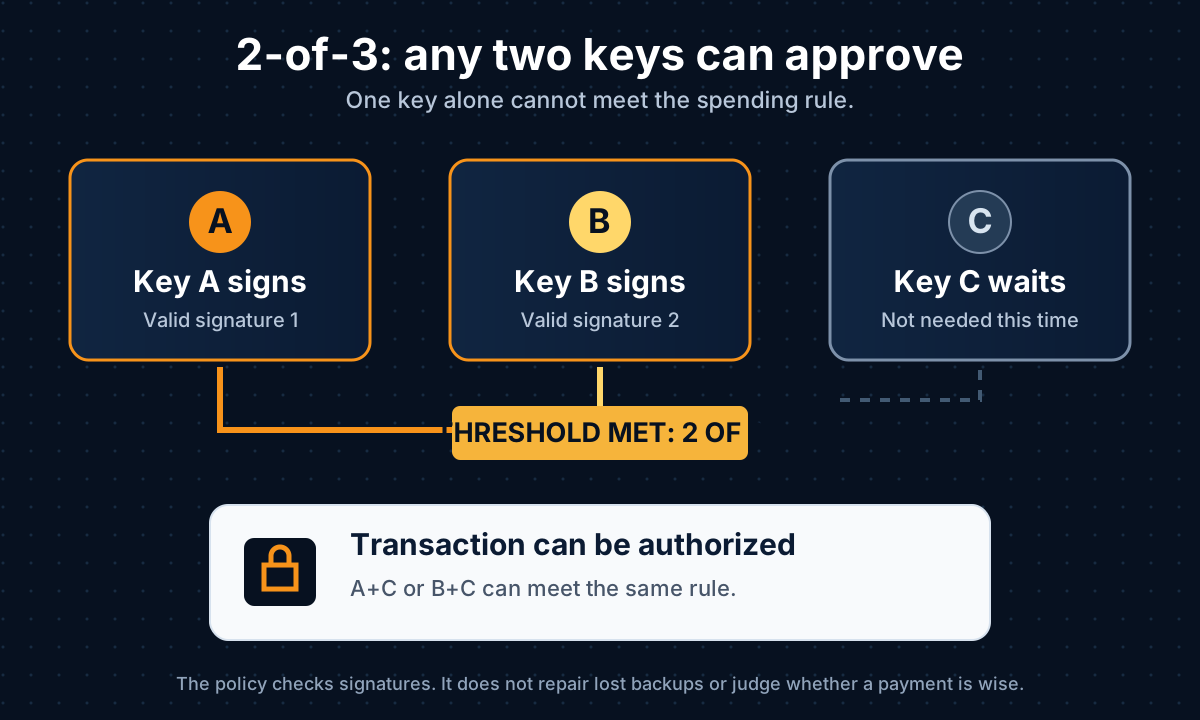
In 2-of-3 multisig, any two valid keys can meet the spending rule; one key alone cannot.
This creates two important consequences:
If one key is lost but the other two still work, the spending threshold can still be met.
If one key is stolen but the attacker does not obtain another valid key, that key alone is not enough to spend.
But reverse both sentences and the risk returns. If you lose access to two keys, you may no longer be able to spend. If an attacker gets two keys, the 2-of-3 rule may be satisfied.
The threshold is a rule, not a rescue service.
Why People Use Multisig Wallets
People use multisig to divide signing authority instead of letting one secret control everything. The exact design depends on the wallet and the people involved, but common goals include the following.
Reducing single-key risk
A normal single-signature wallet may depend on one seed phrase or one signing key. If that secret is exposed, an attacker may be able to spend. If it is lost with no valid recovery method, the owner may lose access.
A carefully designed multisig setup can distribute keys across separate devices, backups, or locations. One laptop failure, one damaged hardware wallet, or one compromised backup does not necessarily end the story.
The word carefully is carrying a lot of weight there. Storing all three seed phrases together, entering them into one online device, or letting one person control every signer can rebuild the same single point of failure under a more impressive name.
Adding shared approval
A family, nonprofit, or business may want a rule that prevents one person from moving funds alone. A 2-of-3 policy can require two authorized people or roles to review and sign a transaction.
This can support internal control, but it does not solve governance by itself. The group still needs clear rules for who may propose a transaction, what each signer must verify, how a departing signer is replaced, and what happens when people disagree.
Planning for inheritance or absence
Multisig can be part of an inheritance or continuity plan because the keys can be separated among people or locations. For example, an owner may hold enough signing authority during normal life while arranging a documented path for trusted people to act later.
That is a design problem and a legal problem, not just a wallet feature. Heirs need accurate instructions, compatible tools, and lawful access without exposing enough information for an early or unauthorized spend. Estate, tax, and legal rules vary, so professional advice may be appropriate.
What Is an Xpub in Multisig?
An xpub, or extended public key, is public-key information that a compatible wallet can use to derive a branch of public keys and receiving addresses. In a multisig wallet, each signer may contribute extended public-key information so the wallet can build the shared address set and recognize which keys belong in its policy.
An xpub is not the same as a seed phrase, extended private key, or signing key. By itself, it is not supposed to provide the private key needed to create a valid signature.
Still, "public" does not mean "post it anywhere."
An xpub can reveal a large branch of related addresses and transaction activity. That can damage financial privacy. Extended-key designs also have technical edge cases that make careless mixing of xpubs and private child keys dangerous. Treat an xpub as privacy-sensitive wallet data and share it only through the process described by the exact wallet's current official documentation.
For the simpler distinction among private keys, seed phrases, and addresses, read Private Key vs Seed Phrase vs Wallet Address.
How a Multisig Transaction Moves
A multisig spend is still a Bitcoin transaction. The difference is that the wallet policy requires multiple signatures before the transaction is complete.
A typical high-level flow looks like this:
One device creates a proposed transaction with the destination, amount, fee, and wallet information.
A signer reviews those details on a trusted screen and adds a signature.
Another signer independently reviews the same transaction and adds a second signature.
Once the threshold is met, the completed transaction can be broadcast to the Bitcoin network.
Wallets may exchange this information using a Partially Signed Bitcoin Transaction, usually shortened to PSBT. The format is designed to carry transaction information and collected signatures between compatible software or offline signers.
The important beginner point is not the file format. It is that each signer must verify what they are approving. Two signatures collected without two real reviews are just one mistake wearing two hats.
Bitcoin transactions may be irreversible after broadcast and confirmation. Every signer should verify the destination, amount, fee, and change details shown by their own trusted device or software before signing.
Multisig Backups Are a System, Not Three Seed Cards
With a simple wallet, beginners often imagine recovery as one item: find the seed phrase, restore the wallet.
Multisig adds another layer. You may need both the secret signing material and the information that tells compatible software how the wallet was constructed.
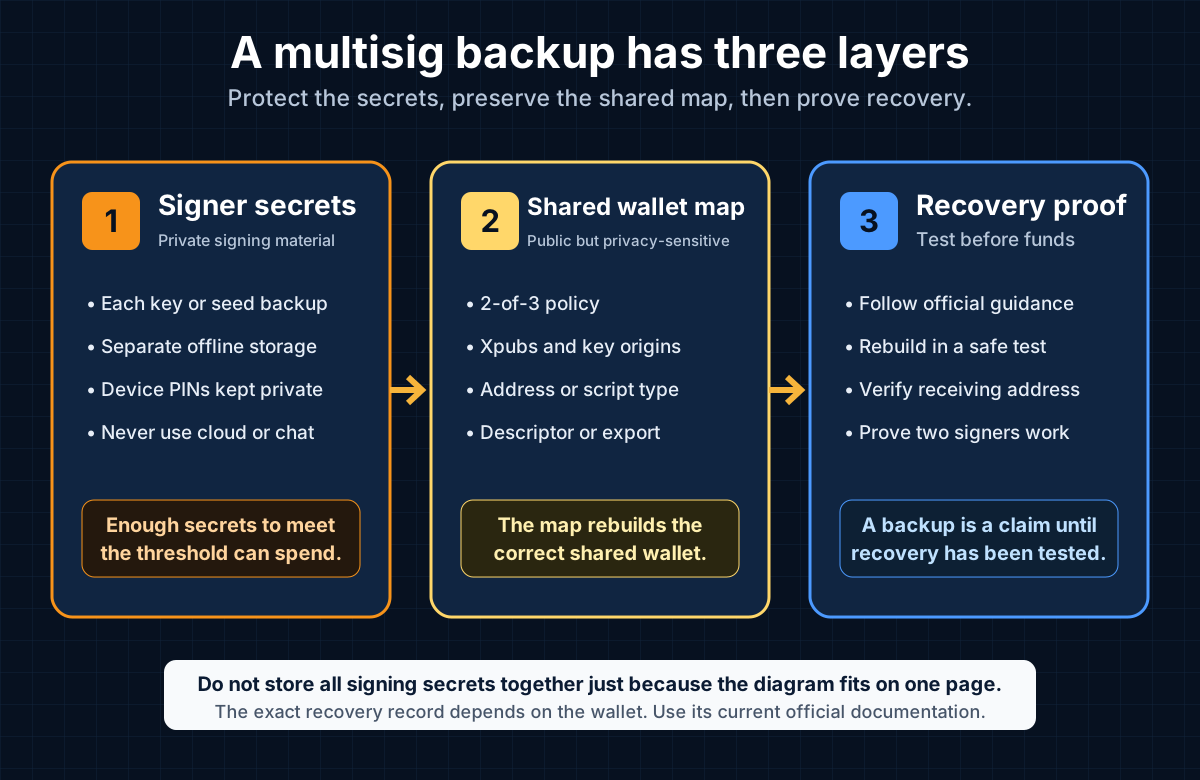
A recoverable multisig plan protects each signer and preserves the shared wallet configuration.
Depending on the wallet, the recovery record may include:
the threshold, such as 2-of-3;
each signer's extended public key and key-origin information;
the wallet's address or script type;
a wallet descriptor, configuration export, or equivalent recovery file;
the wallet software and version information needed to interpret the setup; and
clear, non-secret instructions for rebuilding and testing the wallet.
Those details are not interchangeable with seed phrases. A descriptor or wallet configuration may contain public-key information that helps reconstruct and monitor the wallet without being enough to sign. It can still expose addresses and balances, so it deserves privacy protection.
Each actual signing secret also needs its own offline backup plan. Never place all signing backups together merely because that is convenient. Never upload seed phrases to cloud notes, email, chat, or an AI tool. Never give them to wallet support.
Read Seed Phrase Storage for Beginners before attempting any design that multiplies the number of backups.
Is Multisig Always Safer?
No. Multisig can be more resilient against a well-defined threat and less resilient against a badly understood recovery process.
It may reduce:
the risk that one stolen key is enough to spend;
the risk that one failed device permanently blocks access;
the ability of one team member to move funds alone; and
dependence on one physical location.
It may increase:
setup mistakes involving the threshold, keys, derivation information, or address type;
the number of devices and backups that must remain usable;
coordination failures among people, places, and software;
privacy exposure through shared extended public keys or configuration data;
compatibility risk during a future recovery; and
the chance that heirs or colleagues inherit a puzzle instead of a plan.
A multisig wallet is therefore not a safety upgrade in the way a stronger door lock is a safety upgrade. It is closer to replacing one door with a small building-management system. The system can be excellent. It can also fail in more interesting ways.
How to Evaluate the “Best Multisig Wallet” Claim
There is no universal best multisig wallet. A wallet that fits one person's hardware, technical skill, privacy needs, and inheritance plan may be a poor fit for a three-person organization.
Use criteria before brand names:
Clear policy display: Can every signer verify the threshold and participating keys?
Recovery export: Can you preserve the wallet descriptor or equivalent configuration in a documented format?
Interoperability: Does it support relevant standards and the signing devices you intend to use?
Transaction review: Can each signer verify destination, amount, fee, and change on a trusted display?
Watch-only access: Can you monitor balances without placing signing keys on an online device?
Documented recovery: Does the official guide explain recovery after a lost device, replaced signer, or failed coordinator?
Ongoing maintenance: Are releases, support status, and security guidance current?
Understandable failure plan: Can you explain what happens if each device, person, or backup becomes unavailable?
Do not rely on an old ranking, a sponsored list, or a video that skips recovery. Wallet interfaces, supported devices, fees, policies, and compatibility can change. Verify current official documentation before choosing or moving funds.
If you are still choosing a basic wallet type, start with Best Bitcoin Wallet for Beginners and What Is a Hardware Wallet?.
Is Multisig Good for Beginners?
Multisig is usually better treated as an advanced-beginner topic than a first-wallet assignment.
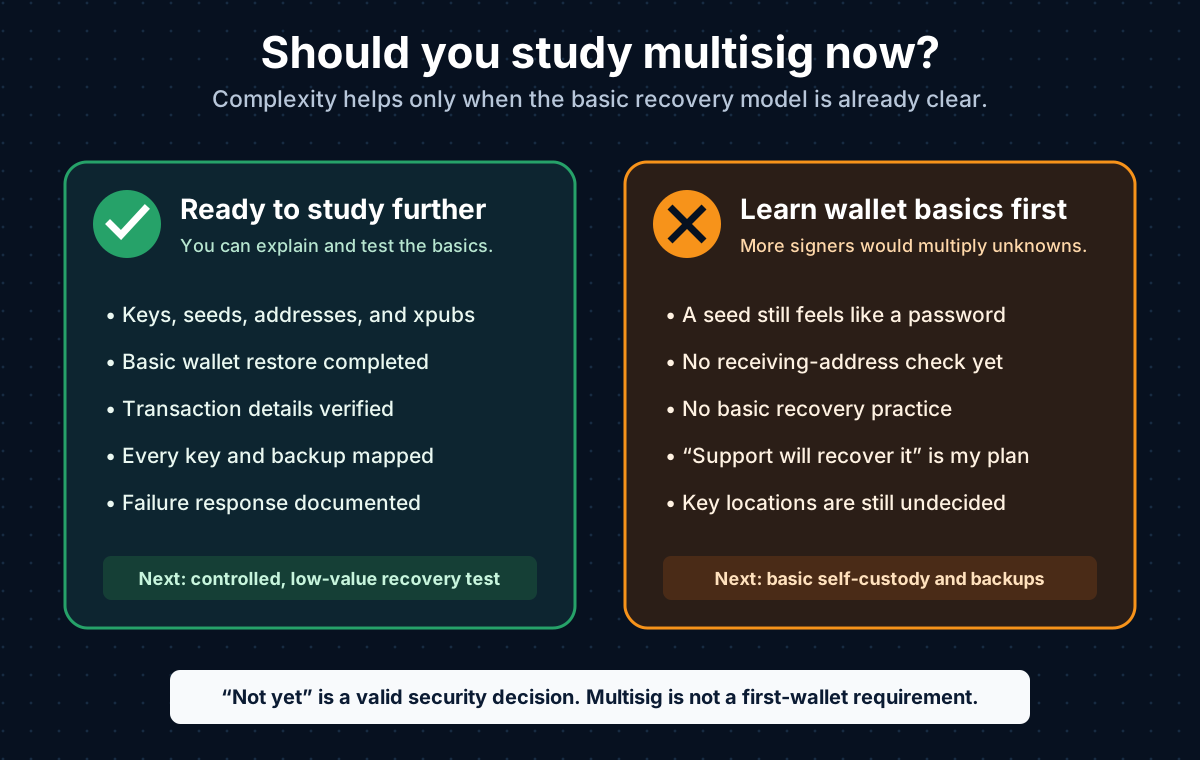
Complexity should arrive after the basic wallet and recovery concepts are already familiar.
You may be ready to study it more seriously if you can already:
explain private keys, seed phrases, receiving addresses, and xpubs without mixing them up;
restore a basic wallet from a protected backup in a controlled test;
verify transaction details on the signing device;
explain where every key and backup will be kept;
preserve and test the shared wallet configuration; and
describe the failure response for a lost device, unavailable signer, or damaged backup.
Learn the basics first if a seed phrase still feels like a password, if you have never verified a receiving address, or if your recovery plan is "support will fix it." Multisig does not remove those responsibilities. It duplicates some of them and connects the copies.
For the broader path, use How to Self-Custody Bitcoin. If you later test multisig, follow the exact wallet's official documentation, begin with an empty or low-value practice setup, and prove recovery before considering meaningful funds. This article intentionally does not provide a product-specific setup tutorial.
Common Multisig Mistakes
Keeping all keys in one place
Three keys in one drawer can fail like one key in one drawer. Separation should match the threat you are trying to reduce, without making lawful recovery impossible.
Backing up seeds but not the wallet configuration
The seed phrases may not tell future software the full threshold, script type, key order, derivation details, or participating public keys. Preserve the exact recovery information the wallet's official documentation requires.
Treating an xpub like a harmless username
An xpub cannot normally sign by itself, but it may reveal a branch of addresses and activity. Protect it as privacy-sensitive data.
Letting one person control every signer
That may defeat a shared-approval goal. It can also put every key in the same operational environment.
Testing spending but not recovery
A successful outgoing transaction proves that signing worked today. It does not prove that your backups can rebuild the wallet on different compatible software after a device failure.
Assuming more devices means more security
Extra devices add independent protection only when their setup, storage, verification, and recovery paths are genuinely independent and understood.
FAQ
Does multisig remove seed phrase risk?
No. Each signer may still rely on a private key, seed phrase, hardware device, or another recovery method. Multisig can prevent one exposed key from being enough to spend, but losing or exposing enough keys to meet the threshold can still cause permanent loss or theft. Protect every signing secret offline according to the exact wallet's official guidance.
What does 2-of-3 mean?
It means the wallet policy includes three public keys and requires valid signatures from any two corresponding private keys to authorize a spend. One key alone is not enough. Losing one key may be survivable if the other two and the wallet recovery information still work.
What is an xpub?
An xpub is an extended public key. Compatible wallets can use it to derive related public keys and receiving addresses without receiving the private key used for signing. An xpub can expose address and transaction activity, so treat it as privacy-sensitive and do not publish it casually.
Is multisig good for beginners?
It can be useful for a beginner who already understands basic self-custody, backups, address verification, transaction review, and recovery testing. It is usually a poor first step when those concepts are still unclear, because multisig adds more keys, more records, and more ways for a future recovery to fail.
Can one lost key lock a 2-of-3 wallet?
Not by itself, if the other two keys and the wallet configuration remain usable. But the setup should be repaired according to current official wallet guidance rather than operated indefinitely with no remaining margin for another loss.
Can a wallet company recover a multisig wallet?
That depends on the exact custody and co-signing design. A purely self-managed wallet provider may not hold enough information or keys to recover anything. An assisted service may have a defined role, but its terms, identity checks, availability, fees, and recovery limits can change. Verify the current official recovery model before using the product, and never send seed phrases or private keys to support.
Risk Disclaimer
This article is for beginner education only. It is not financial, investment, legal, tax, estate-planning, custody, wallet-recovery, or cybersecurity advice. Bitcoin is volatile, and you can lose money. Bitcoin transactions may be irreversible, and multisig setup, signing, backup, configuration, privacy, compatibility, inheritance, or coordination mistakes can cause permanent loss. Never share a private key, seed phrase, recovery phrase, extended private key, password, PIN, login code, or wallet backup. Keep recovery information private and offline. Treat xpubs and wallet descriptors as privacy-sensitive. Wallet software, supported devices, recovery designs, fees, limits, identity checks, regional availability, service terms, and platform policies can change. Verify the exact wallet's current official documentation and check relevant local tax and legal requirements before acting.
Editorial Attribution
Written by Alex Chen. Reviewed by Jordan Blake for factual accuracy, clarity, and beginner safety.